
Your tongue suddenly starts itching. It feels tingly, irritated, maybe even sore. And you have no idea why.
This happens more than you think. An itchy tongue can be a simple allergy reaction — or a sign your body and some say, your spiritual meaning is trying to get your attention. In 2026, more people are asking both the medical and the deeper questions about what tongue itching really means.
What Is an Itchy Tongue Trying to Tell You?
An itchy tongue is rarely random. It is your body sending a signal — about something you ate, something in your environment, or sometimes something deeper going on inside your health.
Most people ignore it. That is a mistake.
The tongue is one of the most sensitive organs in your body. It reacts fast to allergens, infections, deficiencies, and irritants. When it itches, it is usually pointing to something specific.
According to the American Academy of Allergy, Asthma & Immunology (AAAAI), oral allergy syndrome (OAS) — a leading cause of tongue itching — affects up to 5% of the general population and is especially common in people with seasonal pollen allergies.
The key question is: Is this a mild irritation or a warning sign?
Must Visit:10 Right Elbow Spiritual Meanings: Modern Ancient Messages 2026
Warning Signs in Your Tongue You Should Never Ignore
Not every itchy tongue is harmless. Some symptoms signal something serious.
Here are the tongue warning signs that need your attention:
White patches on the tongue — This can indicate oral thrush, a fungal infection caused by Candida albicans. It is common in people with weakened immune systems, diabetes, or those on antibiotics.
Swelling with itching — This combination can point to an allergic reaction, or in severe cases, angioedema — a rapid swelling under the skin. If your throat also swells, this is a medical emergency known as anaphylaxis. Call 911 immediately.
Burning and itching together — This often signals burning mouth syndrome or possible nerve damage. It can also be linked to hormonal changes, especially in postmenopausal women. The National Institute of Dental and Craniofacial Research notes that burning mouth syndrome affects around 2% of the population, more often women over 50.
Sores with itching — Itchy canker sores (aphthous ulcers) usually indicate stress, injury, or nutritional deficiency — particularly low levels of Vitamin B12, iron, or zinc.
Persistent itching with no clear cause — This can be an early sign of diabetes, anemia, or chronic dry mouth (xerostomia). Do not ignore itching that lasts more than 2 weeks.
Top Health Causes of an Itchy Tongue in 2026
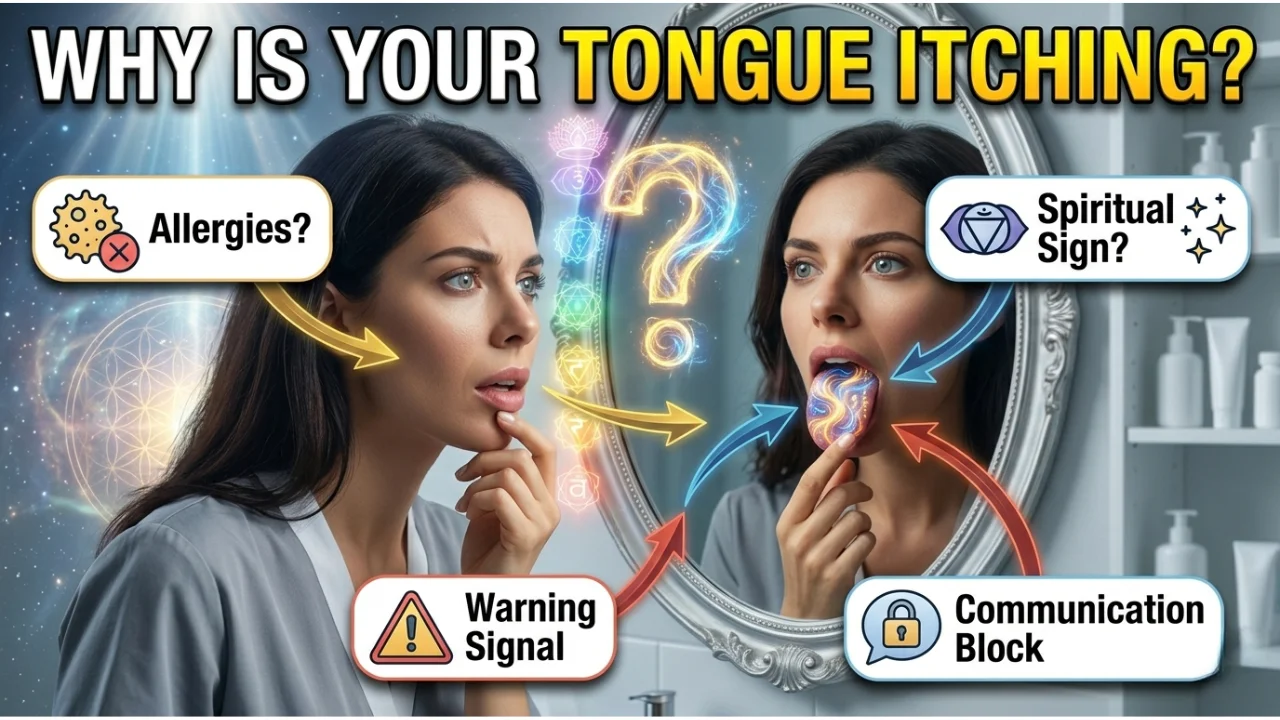
Understanding the root cause is the fastest way to fix it.
Oral Allergy Syndrome (OAS)
This is the most common cause. OAS happens when your immune system confuses proteins in raw foods with pollen. You bite into an apple or peach — and your tongue starts to itch within minutes.
Common triggers include raw fruits (apples, cherries, peaches), vegetables (carrots, celery), tree nuts, and birch, ragweed, or grass pollen. Cooking the food usually destroys the protein and stops the reaction.
Fungal Infection — Oral Thrush
Oral thrush is caused by an overgrowth of Candida — a naturally occurring yeast in the mouth. It causes white patches, soreness, and an itchy or burning feeling. Antibiotics, steroids, or a weakened immune system can all trigger it.
Contact Dermatitis
Your tongue can react to direct contact with irritants. Spicy foods, acidic foods, latex products (dental dams, gloves), or even certain metals like nickel can trigger oral contact dermatitis. The itching usually starts right at the point of contact.
Nutritional Deficiencies
A deficiency in Vitamin B12, iron, or zinc can cause the tongue’s papillae (tiny bumps) to break down. This leads to a smooth, sore, and often itchy tongue surface. This is sometimes called glossitis.
The National Institutes of Health (NIH) reports that Vitamin B12 deficiency affects nearly 6% of adults under 60 in the United States — and up to 20% of those over 60.
Medications
ACE inhibitors (used for blood pressure) are well-known to cause tongue and throat swelling. Certain antibiotics can also disrupt the oral microbiome, triggering oral thrush or allergic tongue reactions.
Geographic Tongue
Geographic tongue is a harmless condition where smooth red patches appear on the tongue, often surrounded by white borders. It looks like a map — hence the name. These patches can feel itchy or sensitive, especially with acidic or spicy food. It affects around 1–3% of the population, according to dental research.
Itchy Tongue Spiritual Meaning — What Is Your Body Signaling?
In many spiritual traditions, the body sends messages through physical sensations. An itchy tongue is no exception.
This is not medical advice — but it is a meaningful perspective many people find comforting or insightful.
Unspoken Words and Suppressed Expression
The most widely held spiritual meaning of an itchy tongue is that you have something important to say — but you are holding it back. Your tongue itches because words are waiting to be spoken.
In many cultures, the tongue represents communication, truth, and self-expression. An itch is seen as a nudge — a prompt to speak your truth, have that difficult conversation, or share something you have been keeping inside.
Intuition Awakening
Some spiritual teachers interpret a tingling or itching tongue as a sign that your intuitive senses are heightening. Your body is tuning in to something your conscious mind has not yet noticed.
Left vs. Right Side — Does It Matter?
In many metaphysical traditions, left vs. right matters:
- Left side itchy tongue — linked to receiving energy; something (or someone) is coming into your life
- Right side itchy tongue — linked to outgoing energy; you are being called to speak, act, or give
A Signal for Mindfulness
Some interpret a sudden tongue itch as a call to slow down, be present, and pay attention to what is being communicated around you — or what you are communicating to yourself.
These interpretations vary across cultures, religions, and belief systems. They are not replacements for medical evaluation — but they add a layer of meaning many people find valuable.
How to Fix an Itchy Tongue — Treatments & Home Remedies
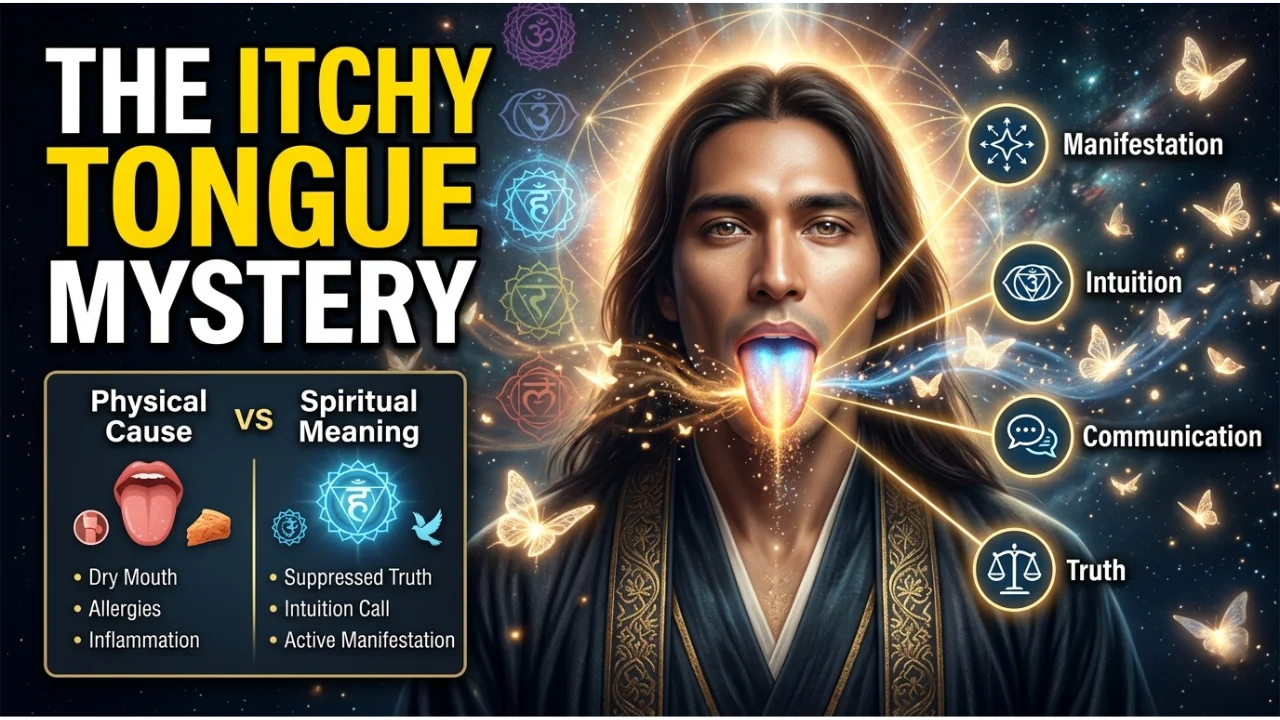
The fix depends on the cause. Here is a practical breakdown:
For Allergic Reactions
- Take an oral antihistamine like cetirizine (Zyrtec) or loratadine (Claritin)
- Avoid the trigger food or allergen
- For severe reactions with swelling or breathing difficulty — use an epinephrine auto-injector (EpiPen) and call 911 immediately
For Oral Thrush
- Your doctor will prescribe antifungal medication — usually nystatin (a mouth rinse) or fluconazole (an oral tablet)
- Avoid sugary foods that feed Candida
- Practice good oral hygiene
For Nutritional Deficiencies
- Start Vitamin B12 supplements (especially if you follow a plant-based diet)
- Increase iron-rich foods — lean meats, lentils, dark leafy greens
- Add zinc through seeds, legumes, and whole grains
Home Remedies That Help
- Saltwater rinse — Mix ½ teaspoon salt in warm water. Rinse for 30 seconds. This reduces inflammation and kills bacteria.
- Cold compress or ice chips — Soothes irritated tongue tissue fast
- Stay hydrated — Dry mouth worsens any tongue irritation
- Avoid spicy, acidic, or rough-textured foods while healing
When to See a Doctor
Go to a doctor if:
- Itching lasts more than 2 weeks
- You also have swelling of the throat or face
- You notice white patches, bleeding sores, or numbness
- You have difficulty swallowing or breathing
FAQ — Itchy Tongue Questions Answered by Experts
What are warning signs in tongues?
Warning signs include white patches (possible oral thrush or leukoplakia), persistent redness or swelling, deep sores that do not heal within 2 weeks, a burning sensation, or sudden numbness. Swelling combined with itching can signal an allergic reaction or, in severe cases, anaphylaxis — a life-threatening emergency. Any of these symptoms that persist should be evaluated by a doctor or dentist promptly.
How do you fix an itchy tongue?
The fix depends on the cause. For food or pollen allergies, antihistamines and avoiding triggers help. For oral thrush, antifungal medications are needed. For nutritional deficiencies, supplements of B12, iron, or zinc are effective. Home remedies like saltwater rinse, cold water, and staying hydrated provide fast short-term relief. Always see a doctor if symptoms persist beyond 2 weeks.
How long does an itchy tongue last?
It depends on the cause. OAS-related itching typically fades within 30 minutes of stopping the trigger food. Itching from medication reactions may last hours. Oral thrush can persist for weeks without treatment. Nutritional deficiency symptoms improve gradually over days to weeks once treatment begins. If your tongue itches for more than 14 days, see a healthcare professional.
What does itchy tongue mean spiritually?
Spiritually, an itchy tongue is most often interpreted as a sign that you have something important to communicate — words being held back. Some traditions also link it to heightened intuition or incoming energy shifts. The left side is associated with receiving, and the right side with giving or speaking out. These interpretations are symbolic and cultural — not medical — but many people find them meaningful for self-reflection.
Conclusion
An itchy tongue can be as simple as an allergic reaction to a raw apple — or as meaningful as a spiritual nudge to speak your truth.
The most important step is to not ignore it. Check the physical causes first. If it persists, see a doctor. And if you are curious about the deeper meaning — that reflection is worth exploring too.
Your tongue speaks, even when you do not. Listen to it.

Malik Sohail is the admin and author of ParensMeaning.com. He researches and writes clear, engaging content about spiritual meanings, symbolism, signs, and interpretations, helping readers understand deeper insights behind everyday experiences.