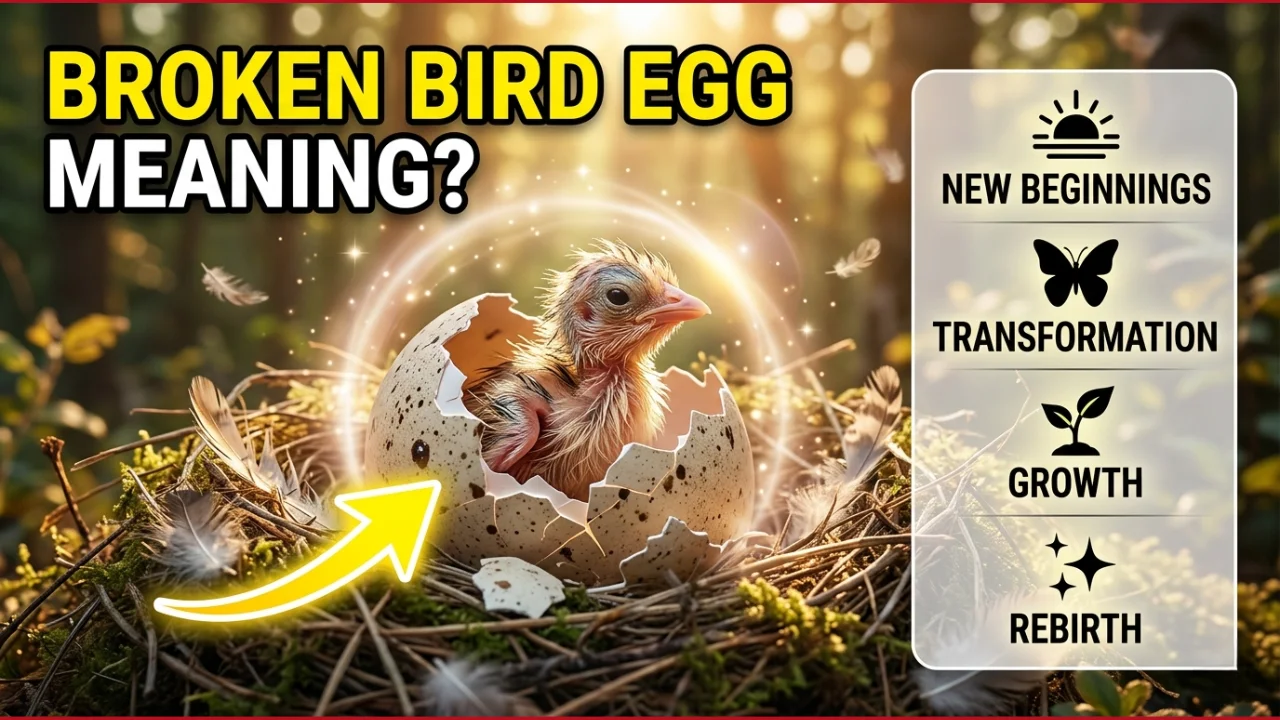
Finding a broken bird egg on the ground can feel like a small tragedy. But a cracked shell rarely tells the story you think it does.
In most cases, a broken bird egg is proof that life already happened — not proof that it ended. This guide explains the real causes, the survival odds, the spiritual meaning behind broken eggs, and exactly what to do next.
What Causes Broken Bird Eggs?
A broken bird egg is usually the result of one of five things: natural hatching, predation, parental behavior, weak shells, or human disturbance. Each leaves different clues behind.
Natural Hatching vs. Accidental Breakage
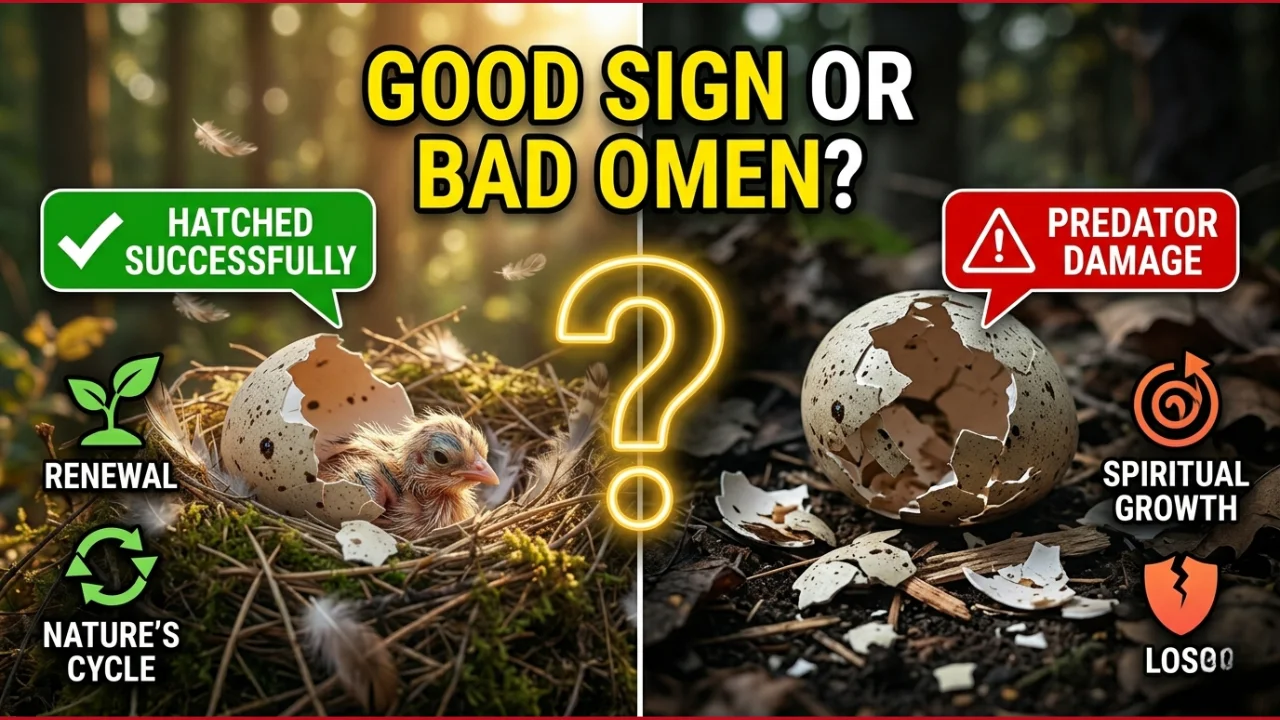
A hatched eggshell looks very different from a damaged one. When a chick hatches, it uses a tiny, temporary spike on its beak called an egg tooth to chip a clean line around the shell from the inside. A broken eggshell from predation or an accident, by contrast, usually shows jagged, crushed, or punctured edges with no clean pip line.
Predators and Scavengers
Predation is the leading cause of nest failure. Field studies using nest cameras found that mammals, corvids like jays and crows, and birds of prey account for the majority of songbird egg losses, with daily survival rates varying sharply by habitat and nest height (Conservation Evidence; Songbird Survival UK). Raccoons, snakes, squirrels, and chipmunks are common culprits in backyard settings.
Parental Rejection or Nest Disturbance
Parent birds sometimes remove and drop an egg on purpose. This happens when an egg is infertile, when a brood parasite (like a cowbird) sneaks a foreign egg into the nest, or simply as routine post-hatch nest-keeping. A clean, empty, odorless shell often points to this kind of intentional removal rather than an attack.
Calcium Deficiency and Thin Shells
Thin, weak eggshells crack far more easily, and calcium deficiency is the most common cause. History gave us a dramatic example: the pesticide DDT disrupted calcium metabolism in birds of prey, thinning eggshells by 17–19% or more and triggering steep population declines in peregrine falcons, bald eagles, and ospreys before the chemical was banned in 1972 (EPA; JSTOR Daily). Poor diet can produce the same fragile result today.
Human Interference and Environmental Stress
Storms, high winds, mowing, pruning, and even close human activity near a nest can knock eggs loose or cause parents to abandon a clutch. Exposed nests in shrubs and low branches are the most vulnerable to weather-related breakage.
Must Visit:Heart With Wings: Proven Methods for Spiritual Awakening 2026
Can a Bird Survive With a Broken Egg?
Yes, sometimes — survival depends almost entirely on whether the inner membrane stayed intact. A hairline crack is not automatically a death sentence.
Hairline Crack vs. Full Break
A hairline crack that doesn’t tear the membrane underneath can still hold in moisture and keep out bacteria, giving the embryo a real chance. A full break that ruptures the membrane exposes the embryo to rapid dehydration and contamination, which is usually fatal within days (Biology Insights).
Stage of Incubation and Survival Odds
Timing matters. Early-stage embryos are fragile and sensitive to shock, while embryos close to hatching are more developed and slightly more resilient to minor shell damage. Eggs need to lose roughly 12–14% of their internal moisture over a full incubation period — a damaged shell speeds that loss up to a dangerous rate.
Signs the Embryo Did Not Survive
A foul smell, a sunken or discolored shell, leaking fluid, or visible mold are all signs the embryo did not make it. A dry, odorless, empty shell usually means a successful hatch already happened — not a loss.
What to Do If You Find a Broken Bird Egg
Leave the egg where you found it and observe from a distance first. Wildlife agencies agree this is the safest first step in almost every case.
Step 1: Don’t Touch or Move It Right Away
Handling a wild egg can introduce bacteria, disturb scent cues parents use, or even break federal law. Most native wild bird eggs and nests are protected under the Migratory Bird Treaty Act, which makes possessing them illegal without a permit.
Step 2: Check for Nearby Nests or Parent Birds
Look up and around before doing anything else. The U.S. Fish and Wildlife Service advises checking for a nearby nest, recent storm damage, or a parent bird still attending the area before assuming an egg is abandoned (USFWS).
Step 3: When to Contact a Wildlife Rehabilitator
Call a licensed wildlife rehabilitator if the egg belongs to a threatened or endangered species, or if you’re unsure how to proceed. Most state wildlife agencies keep public directories of licensed rehabbers for exactly this situation.
What Happens If a Bird’s Egg Breaks Naturally vs. Accidentally
A natural hatch leaves a clean, two-piece shell with a chick or fledgling nearby. An accidental break leaves shattered fragments, yolk residue, or signs of predation — and in either case, egg loss is a normal part of the wild reproductive cycle, not a crisis that needs human rescue.
The Spiritual Meaning of a Broken Bird Egg: Embracing New Beginnings

A broken bird egg is widely seen as a symbol of new beginnings — the breaking open of one stage of life to make room for the next. This meaning shows up across cultures far older than any backyard sighting.
Broken Eggs as Symbols of Loss and Letting Go
For some, a broken shell represents an ending — a release of something fragile that couldn’t be protected. This interpretation leans into grief and acceptance rather than fear or bad luck.
Broken Eggs as Symbols of Transformation and Rebirth
For most traditions, though, the dominant theme is transformation. The egg has to break for new life to emerge, which makes it a near-universal metaphor for growth, change, and starting over.
Common Spiritual Interpretations Across Cultures
Eggs as rebirth symbols appear in ancient Persian Nowruz traditions, Christian Easter customs, Chinese red-egg birth ceremonies, and Hindu cosmology, where the universe itself is described as hatching from a cosmic egg. The recurring thread is simple: breaking is the beginning, not the end.
How to Prevent Broken Bird Eggs
Good nutrition, smart nest placement, and fewer disturbances are the three biggest factors in preventing broken bird eggs.
Nutrition and Calcium Support
A calcium-rich diet builds stronger shells. Backyard bird enthusiasts can offer crushed eggshell, oyster shell grit, or a cuttlebone near feeding areas to support local nesting birds during breeding season.
Safer Nest Box and Nest Placement
Research shows nest design matters: boxes with predator guards saw nesting success increase by roughly 7% in U.S. studies, and nests placed higher off the ground consistently fledge more successfully (Songbird Survival UK; USDA Forest Service).
Reducing Predator and Human Disturbance
Keep cats indoors during nesting season, avoid trimming nesting shrubs until fledglings leave, and add predator guards to nest boxes. Small changes like these measurably cut down on accidental egg loss.
FAQs ;
What happens if a bird’s egg breaks?
If a bird’s egg breaks, the outcome depends on the cause. A clean break from hatching means a chick emerged successfully. A jagged or crushed break from predation, weather, or a fall usually means the embryo did not survive, and the shell becomes part of the natural nutrient cycle as other animals scavenge the remains.
What does a broken bird egg mean spiritually?
Spiritually, a broken bird egg is most often interpreted as a sign of new beginnings, transformation, and growth. Across cultures, the breaking shell represents the necessary end of one stage so a new one can begin, rather than a symbol of loss alone.
Can a bird survive with a broken egg?
A bird embryo can sometimes survive a broken egg if the inner membrane stays intact and the damage is minor. Full breaks that tear the membrane almost always lead to dehydration, contamination, and embryo death within a short time.
What to do if you find a broken bird egg?
Leave it alone, observe from a distance, and check for a nearby nest or parent bird before doing anything else. Contact a licensed wildlife rehabilitator only if the species is protected or you’re unsure how to proceed — never collect or relocate the egg yourself.
Final Thoughts
A broken eggshell on the ground rarely means tragedy. More often, it’s quiet proof that a chick made it out, a parent did its job, or nature simply moved on to its next cycle. The next time you spot one, you’ll know exactly what story it’s telling — and maybe see it as the new beginning it really is.

Malik Sohail is the admin and author of ParensMeaning.com. He researches and writes clear, engaging content about spiritual meanings, symbolism, signs, and interpretations, helping readers understand deeper insights behind everyday experiences.