
A flash of gold in the trees. A tiny bird singing on a fence post. That small moment can stop you in your tracks. Yellow birds have carried Spiritual meaning of joy and light for centuries, and people across the USA still see them as a sign worth noticing.
This guide covers what a yellow bird symbolizes, the real species you’re likely to spot in your own backyard, and the cultural stories tied to the name “yellow bird.” You’ll get facts, not guesswork.
What Does a Yellow Bird Symbolize?
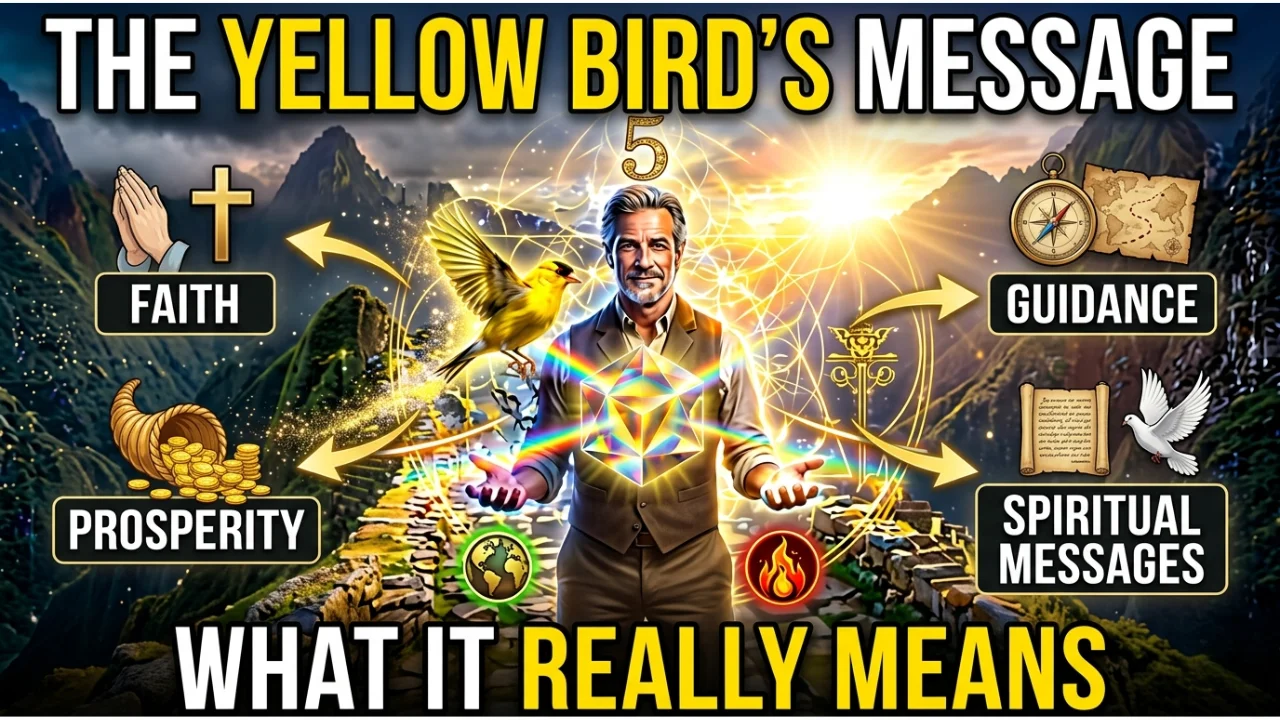
What does the yellow bird represent? Across most traditions, the answer stays consistent: joy, hope, and positivity. The color yellow is linked to sunlight and warmth, so it’s no surprise that a yellow bird often stands in for optimism and renewal.
In Christian symbolism, yellow birds are tied to faith and divine guidance, reflecting light and spiritual promise. In Native American traditions, yellow birds are often seen as messengers, carrying prayers between the earthly and spiritual worlds. Chinese culture links yellow to vitality and prosperity, often connected to auspicious events.
The common thread is simple: a yellow bird is rarely read as a bad sign. It’s almost always tied to brighter days ahead, personal growth, or a gentle nudge toward optimism.
Must Visit:Discover Wayne’s Hidden Spiritual Power and Legacy 2026
Is a Yellow Bird Good Luck?

Short answer: in most cultural traditions, yes. A yellow bird sighting is widely treated as a good luck symbol, not a warning.
In Native American belief systems, a yellow bird’s appearance is often seen as a blessing or encouragement to keep moving forward on your path. In parts of Latin American folklore, yellow birds are tied to good fortune and protection. Even in Western color theory, yellow is consistently rated as the color most associated with happiness and confidence.
There’s one exception worth knowing. A small number of spiritual traditions connect yellow birds to transformation tied to endings, such as the close of a life chapter. Even there, the meaning isn’t negative. It points to change and renewal, not loss. So if you’re asking whether seeing a yellow bird is good luck, the consistent, fact-based answer across traditions is: it’s a positive sign far more often than not.
Common Yellow Birds You Might See in the USA
Symbolism aside, it helps to know which birds you call yellow actually live in North America. Knowing the real species adds credibility to the experience, and makes it easier to know exactly what you saw.
American Goldfinch (Spinus tristis) is the bird most Americans picture when they hear “yellow bird.” Breeding males turn a brilliant lemon-yellow with a black cap, while females stay a duller olive shade. The species has an estimated population of 43 million birds with a stable trend, and it’s the official state bird of New Jersey, Iowa, and Washington (though each state uses a different regional nickname for it). According to
Travis Audubon, American Goldfinches breed later than most songbirds, often in June or July, since their diet depends on seeds that mature in late summer. You can find them at backyard feeders stocked with sunflower seeds or nyjer.
Yellow Warbler *(Setophaga petechia)* is North America’s most widespread warbler. Males glow golden-yellow with faint rusty streaks across the chest, and they’re almost entirely insectivorous, hunting caterpillars and beetles in shrubs near wetlands and streams.
Yellow-breasted Chat *(Icteria virens)* is the largest warbler-type bird in North America, so distinct that it sits in its own family, Icteriidae. It’s bright yellow at the throat and chest but stays hidden in dense thickets, making it more often heard than seen.
Western Tanager *(Piranga ludoviciana)* breeds in coniferous forests across the western states. Males pair a vivid yellow body with a red-orange head, a color that actually comes from a pigment called rhodoxanthin, absorbed through diet rather than produced naturally by the bird.
These four species cover most small yellow bird sightings across the country, from backyard feeders to forest edges.
What Do You Call a Yellow Bird?
This question comes up a lot, and the answer depends on context.
If someone’s asking for a general term, “yellow bird” itself works fine; it’s a broad, informal category, not a single species. Older folk language sometimes used “wild canary” as a nickname for the American Goldfinch, since its bright color resembles a pet canary, even though the two aren’t closely related.
If someone wants the specific species name, that depends entirely on what was seen: Goldfinch, Yellow Warbler, Chat, or Tanager are the most common answers in the USA, based on region and season. Bird identification apps and field guides from Cornell’s All About Birds are the most reliable way to confirm an exact match, since plumage can shift with season, sex, and age.
Yellow Birds in Culture: Is Yellow Bird a True Story?
This question actually points to two different things, and most articles online blur them together. Here’s the accurate breakdown.
The song “Yellow Bird” began as a Haitian folk song called “Choucoune,” written in the 19th century. It was later adapted into English and popularized internationally by artists including the Norman Luboff Choir and Arthur Lyman in the late 1950s and early 1960s. It’s often mistaken for a Jamaican or Trinidadian folk tune, but its documented roots trace back to Haiti.
The novel “The Yellow Birds” is a different work entirely. Written by Kevin Powers, a U.S. Army veteran, the book draws on his own deployment in Iraq. While the novel is not strictly autobiographical, it draws heavily on the author’s experiences as a soldier in Iraq, shaping its characters and events. It was a finalist for the National Book Award and was later adapted into a film of the same name, starring Alden Ehrenreich.
So “is Yellow Bird a true story” doesn’t have one single answer; it depends on which “Yellow Bird” someone means. The song is a real folk tradition with a documented Haitian origin. The novel is fiction grounded in real wartime experience, not a literal memoir.
FAQs About Yellow Birds
Is a yellow bird good luck?
In most cultural and spiritual traditions, yes. Yellow birds are consistently linked to good fortune, joy, and positive change, with very few traditions treating the sighting as a negative sign.
What does the yellow bird represent?
A yellow bird typically represents hope, happiness, and renewal. Its bright color connects it to sunlight and warmth, themes that show up across Christian, Native American, and Asian symbolism alike.
Is Yellow Bird a true story?
It depends which one. The song “Yellow Bird” comes from a real 19th-century Haitian folk song called “Choucoune.” The novel “The Yellow Birds” by Kevin Powers is fiction, but it’s grounded in the author’s real experience as a soldier in Iraq.
What do you call a yellow bird?
“Yellow bird” is a general term covering several species. In the USA, the most common ones are the American Goldfinch, Yellow Warbler, and Western Tanager. Older folk language sometimes calls the goldfinch a “wild canary.”
Final Thoughts
A yellow bird carries one of the most consistent symbols in nature: hope. Whether it’s a goldfinch at your feeder or a warbler passing through on migration, that flash of yellow has meant joy and renewal across cultures for generations. Next time you spot one, you’ll know exactly what it represents, and exactly what species it might be.

Malik Sohail is the admin and author of ParensMeaning.com. He researches and writes clear, engaging content about spiritual meanings, symbolism, signs, and interpretations, helping readers understand deeper insights behind everyday experiences.