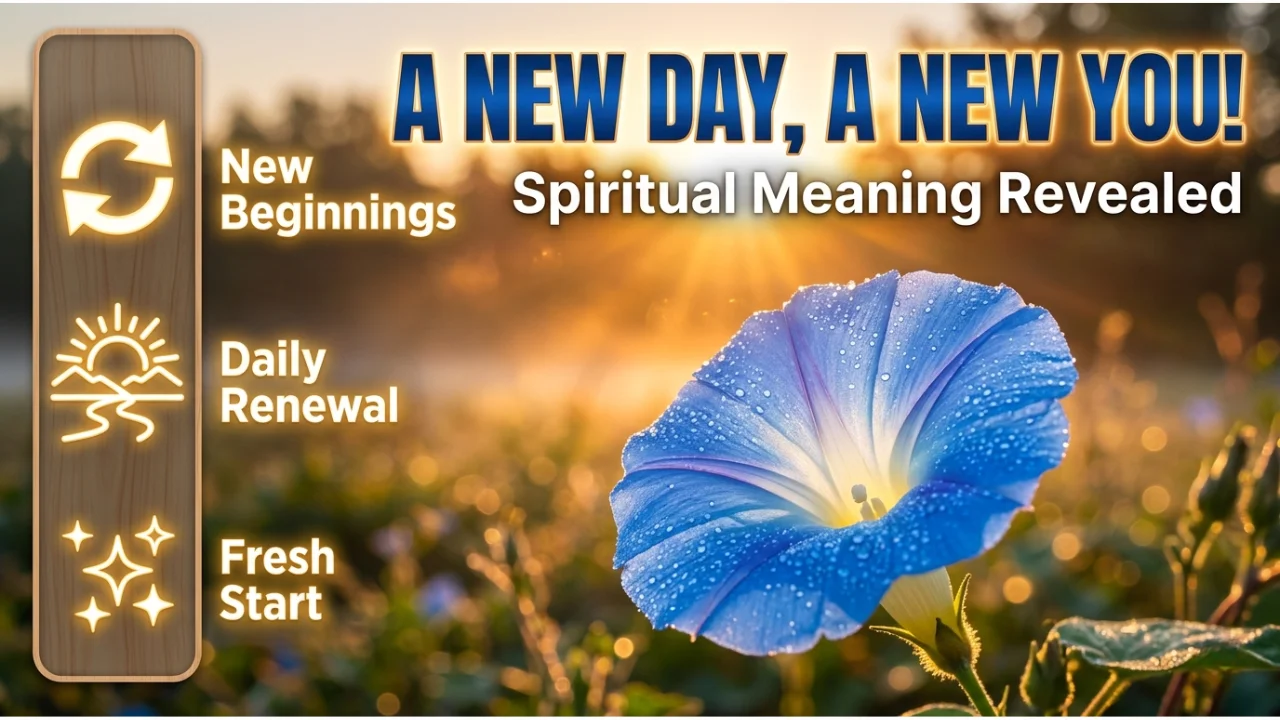
Morning glory opens with the sunrise and closes before sunset. One bloom, one day, gone by evening. That short, bright life is exactly why so many cultures treat this flower as a spiritual teacher.
This guide breaks down the full spiritual meaning of morning glory — its symbolism across world cultures, what each color represents, what it means to dream of one, and how it connects to love, luck, and daily renewal.
What Is the Spiritual Meaning of Morning Glory?
At its core, the spiritual meaning of morning glory is renewal. The flower opens fresh every single morning, no matter what happened the day before. That daily reset is why so many traditions read it as a symbol of rebirth, resilience, and a second chance at the day ahead.
Its short life span adds a second layer of meaning: impermanence. A morning glory blooms, shines, and fades within hours. Spiritually, this reminds people to stay present and not take any single moment for granted.
The name itself carries the symbolism. In Japan, the flower is called asagao, meaning “morning face.” Botanically, it belongs to the genus Ipomoea, which holds over 600 recognized species within the wider Convolvulaceae family of roughly 1,600 species (Britannica). That scale shows just how far this flower’s symbolism has traveled — across continents, climates, and centuries.
Must Visit:Eyes Open: 10 Deep Spiritual Meanings and Ancient Wisdom
Morning Glory Spiritual Symbolism Across Cultures and Religions
Different cultures attach different meanings to the same bloom. Here is how the spiritual symbolism of morning glory shows up around the world.
China Morning glory is tied to the Qixi legend, sometimes called the Chinese Valentine’s Day. Two celestial lovers, separated by the Milky Way, are allowed to reunite for one day each year. The flower’s single-day bloom mirrors that reunion, making it a symbol of devotion that survives distance.
Japan During the Edo period, asagao cultivation became a national pastime. The flower also appears in the creation myth of Izanagi and Izanami, where it represents lasting love and beauty. More broadly, it stands for life’s fleeting, transient nature.
Aztec and Maya civilizations Aztec priests called the plant tlitliltzin and used its seeds in sacred rituals meant to open a channel to the divine. Maya communities used it in similar ceremonies tied to prophecy and spiritual vision. (Note: the seeds contain compounds chemically related to LSD and are toxic in any meaningful dose — this is historical and cultural context, not a suggestion for use.)
Native American traditions Several tribes viewed morning glory as a bridge between the physical and spiritual worlds, associating it with strength, protection, and resilience against hardship.
Christianity Some Christian traditions read the flower’s single-day life as a quiet parable on mortality — a reminder that earthly life, like the bloom, is brief.
Buddhism The fading flower illustrates anatta, or non-self — the idea that nothing stays fixed. Watching a morning glory open and close in one day is treated as a small daily lesson in letting go.
Victorian England In the Victorian language of flowers, morning glory carried a double meaning: devoted, undying love, but also love in vain or unreciprocated affection — depending on context and who received the bouquet.
Morning Glory Color Meanings and Spiritual Significance
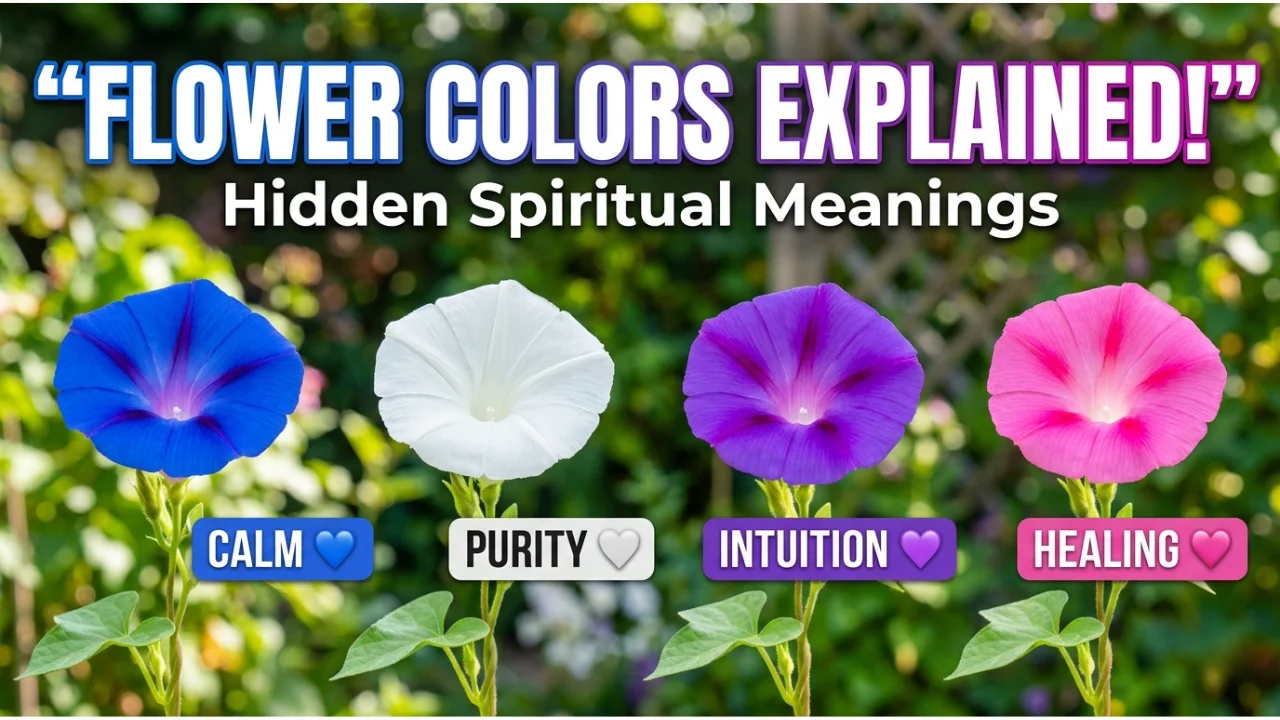
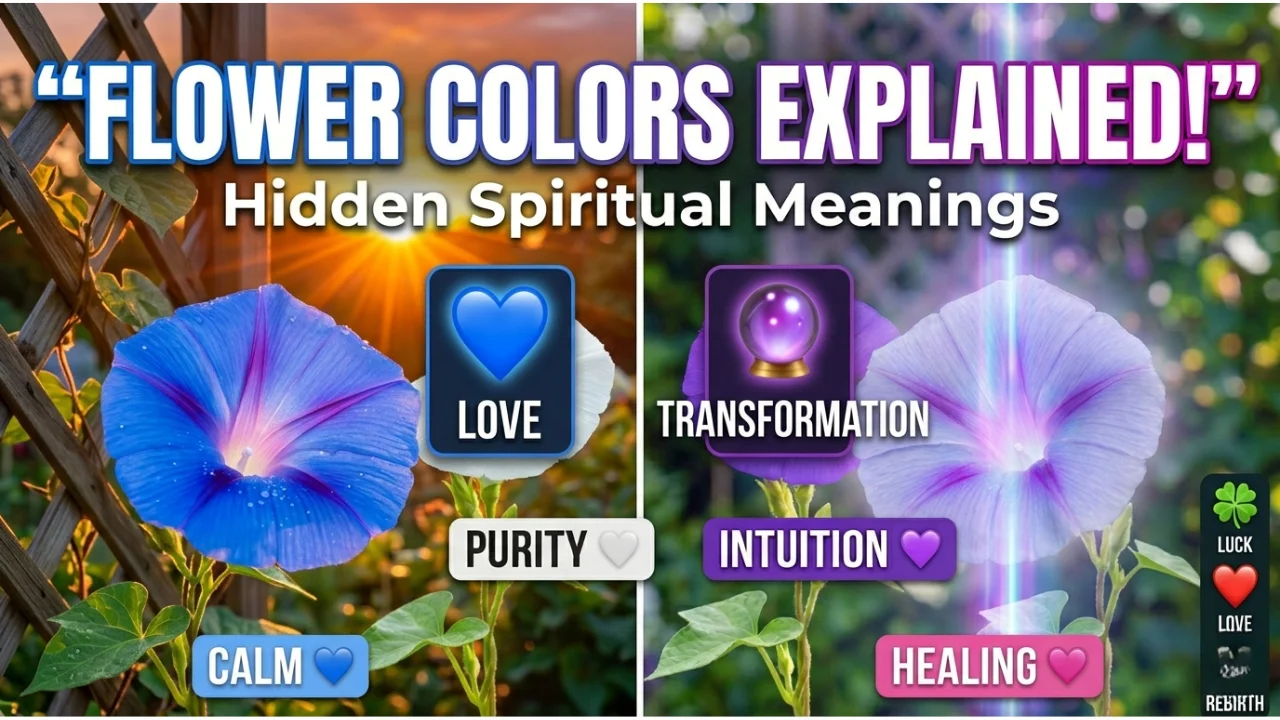
Color changes the message. Here’s what each shade adds to the morning glory spiritual meaning.
Blue stands for trust, calm, and clarity. It’s the most iconic morning glory shade and the one most linked to peace of mind.
White represents purity and fresh starts — a clean slate, spiritually speaking.
Purple signals transformation and intuition, often tied to deeper spiritual insight.
Pink carries themes of emotional healing and affection, especially after a hard season.
Red is the color of passion, vitality, and a strong will to keep going.
Yellow points to mental clarity and quiet optimism, often linked to early-stage enlightenment.
Morning Glory in Dreams, Tattoos, and Modern Spiritual Practice
Dreaming of morning glory is generally read as a good sign. It often points to a fresh start, a burst of luck, or a part of your life that’s finally ready to bloom.
A morning glory tattoo carries similar weight in body art. People choose it to mark resilience after hard times, a love that endures distance, or a personal season of growth. The climbing, twisting vine is frequently used to represent overcoming obstacles one wrap at a time.
In modern spiritual practice, some people use the flower’s daily bloom cycle as a manifestation cue — a short morning ritual or journaling prompt built around the idea of “blooming where you are,” done at sunrise alongside the flower itself.
In feng shui, morning glory is sometimes placed near an east-facing window or entrance. Eastern light is linked to fresh energy, so the placement is meant to reinforce the plant’s natural renewal symbolism.
If morning glory keeps showing up in your life — in dreams, in gifts, in random sightings — many spiritual readings treat that as a nudge to slow down and start something new, rather than wait for a “better” moment.
Morning Glory Meaning in Love, Relationships, and Luck
What is morning glory in relationships? It depends on the era. In Victorian times, gifting morning glory could mean a love that was real but doomed, or affection that wasn’t returned. The Qixi legend from China softened that read into something more hopeful: love strong enough to survive separation, distance, and time.
Today, the meaning has shifted further toward the positive. Many people now use morning glory to represent lasting affection — a relationship that renews itself daily, the same way the flower does. It’s become a quiet symbol for long marriages and long-distance couples alike.
Are morning glories good luck? In several traditions, yes. Native American symbolism links the flower to protection from bad luck and negative energy. Its daily rebirth is also treated as a luck omen on its own — proof that a new chance arrives every single morning, regardless of yesterday.
Morning glory is also one of two official September birth flowers, paired with the aster. For people born that month, it’s said to represent quiet determination and a steady, renewing kind of strength.
FAQs:
What do morning glories symbolize spiritually? Morning glories symbolize rebirth, resilience, and impermanence. Their daily bloom-and-fade cycle is read across cultures as a reminder to start fresh each day and stay present, since nothing — including the flower itself — lasts forever.
What is morning glory in relationships? In relationships, morning glory represents enduring love — historically a love that’s sincere but distant or unreturned (per Victorian flower language), and in Chinese tradition, a devotion strong enough to survive separation, as in the Qixi legend.
Are morning glories good luck? Yes, in many traditions. Native American symbolism ties the flower to protection from bad luck, and its daily renewal is widely seen as a sign that a fresh chance always arrives with the next sunrise.
What is the meaning behind morning glory? The core meaning behind morning glory is renewal through impermanence. It blooms fully, then fades within a single day, making it a natural symbol of resilience, rebirth, and living fully in the present moment.
Conclusion
Morning glory packs an entire spiritual lesson into one short bloom: show up fully, fade gracefully, and trust that tomorrow brings a fresh start. Whether you’re drawn to its colors, its place in love and luck, or its quiet reminder about impermanence, this flower has earned its symbolism the honest way — one sunrise at a time.

Malik Sohail is the admin and author of ParensMeaning.com. He researches and writes clear, engaging content about spiritual meanings, symbolism, signs, and interpretations, helping readers understand deeper insights behind everyday experiences.