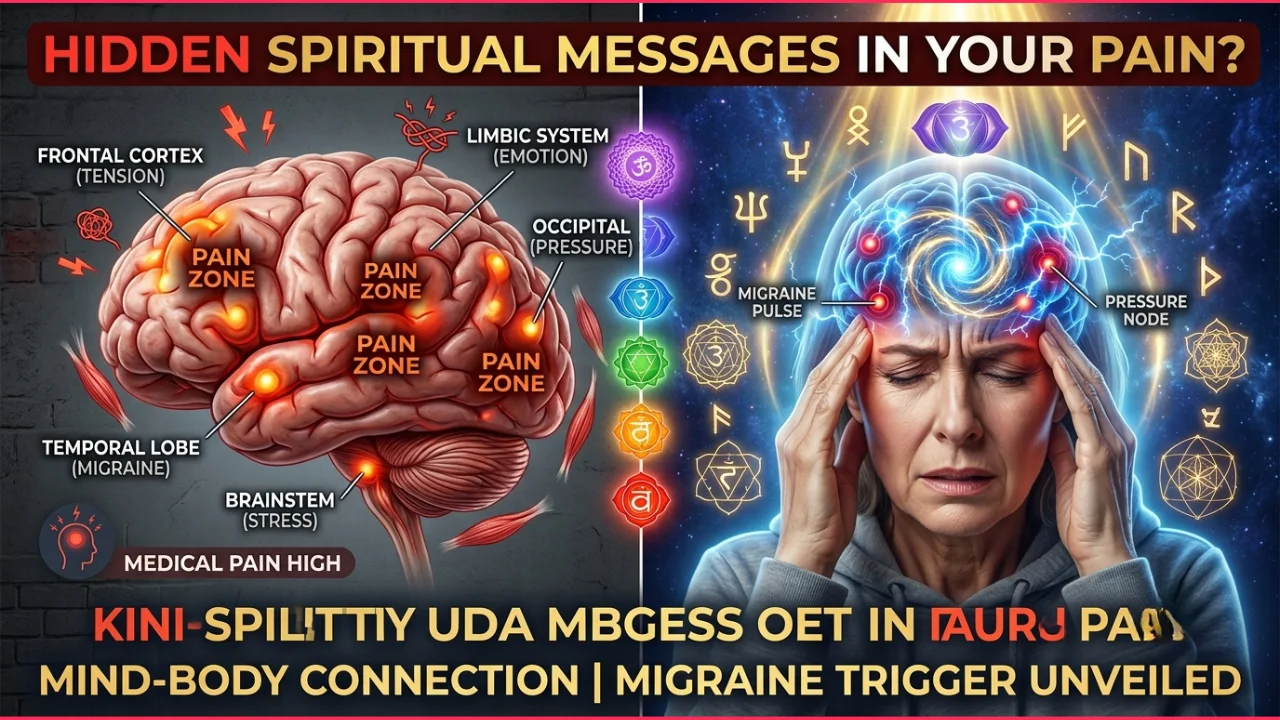
Your head is pounding again. Maybe it’s the third time this week. You reach for a painkiller, but a small voice asks: why does this keep happening?
Headaches are more than random pain. They carry physical triggers and, for many people, emotional or energetic signals too. This guide breaks down both sides — the medical facts and the deeper Spiritual meaning — so you can finally understand what your head is trying to tell you.
What Are Headaches? Types, Causes & Meaning Explained
A headache is pain that shows up in your head or face. Doctors describe it as throbbing, tight, sharp, or dull, depending on the type. It’s one of the most common health complaints on earth — about 96% of people will experience one at some point in their life, according to Cleveland Clinic.
Headaches split into two broad groups:
- Primary headaches — the pain itself is the condition. Nothing else is causing it. Tension, migraine, and cluster headaches fall here.
- Secondary headaches — the pain is a symptom of something else going on, like sinus infection, dehydration, or high blood pressure.
There are more than 150 recognized types of headaches, per the World Health Organization. That number alone tells you headaches aren’t a “one size fits all” problem.
Beyond biology, many wellness practitioners view headaches as messages from the body. Persistent pain in the head is often tied to unresolved stress, emotional overload, or blocked energy that hasn’t found release. We’ll dig into that shortly — but first, let’s cover what’s happening physically.
Must Visit:Dream Frogs: Decoding Their Powerful Spiritual Messages in 2026
Common Physical Types of Headaches and Their Triggers
Understanding your headache type is the fastest way to find real relief. Here are the most common ones and what sets each apart.
Tension-type headaches are the most frequent primary headache, affecting between 46% and 78% of adults at some point, according to research cited by Medical News Today. They feel like a tight band squeezing the head, usually on both sides. Stress, poor sleep, and dehydration are common triggers.
Migraine is a neurological condition, not just “a bad headache.” It causes throbbing pain, usually on one side, along with nausea, light sensitivity, and sometimes aura — visual disturbances like zigzag lines or flashing spots. Around 25% of people with migraine experience aura, per MNT. Migraine often runs in families and can be linked to hormone shifts, skipped meals, or bright lights.
Cluster headaches bring intense, burning pain around one eye. They’re rare — affecting roughly 1 in 1,000 adults — but they hit hard, sometimes up to eight times a day during an active cluster period, states the WHO.
Cervicogenic headaches start in the neck. Muscle tension, arthritis, or nerve compression there sends referred pain to the front of the head. Unlike migraine, these headaches usually don’t respond well to migraine medication.
Sinus headaches bring dull, throbbing pressure around the eyes, cheeks, and forehead, often linked to allergies or infection.
Hormone-related and menstrual headaches show up around shifts in estrogen — during periods, pregnancy, or menopause.
Caffeine and hangover headaches stem from substance withdrawal or excess alcohol, both of which affect blood flow to the brain.
Medication-overuse headaches (also called rebound headaches) happen when pain relievers are used too often — generally more than 15 days a month — and the medication itself starts causing more pain than it solves, notes Healthline.
Thunderclap headaches are sudden, severe, and reach peak pain within a minute. These need immediate medical attention since they can signal a bleed or blood vessel issue.
Each type has its own rhythm, location, and cause — which is exactly why a “one-pill-fits-all” approach rarely works long term.
The Spiritual Meaning of Headaches: What Your Body Is Telling You

Medicine explains the biology. But many people ask a deeper question — is there a spiritual or emotional cause behind their pain? Traditional healing systems, from Ayurveda to energy work, have explored this link for centuries.
What is the spiritual meaning of headaches? In many holistic traditions, a headache signals mental overload — too much thinking, worrying, or holding onto things you can’t control. It’s viewed as a sign that your mind and spirit are asking for stillness. Some practitioners see it as a call to slow down and reconnect with the present moment instead of living entirely in your head.
Can headaches have an emotional or spiritual cause? Yes, many holistic practitioners believe so. Suppressed emotions — like unspoken anger, grief, or anxiety — are thought to build tension that eventually surfaces as physical pain. Western medicine supports part of this idea too: stress is one of the most well-documented headache triggers, creating a real bridge between emotional strain and physical symptoms.
What do recurring headaches symbolize spiritually? Frequent, repeating headaches are often interpreted as a pattern your body is trying to interrupt. Rather than a single stressful event, recurring pain may point to an ongoing situation — a relationship, work pressure, or self-criticism — that hasn’t been addressed. Some spiritual teachers describe this as the body “repeating the lesson” until it’s finally acknowledged.
Are headaches connected to stress and blocked energy? Many energy-healing traditions say yes. When stress isn’t released, it’s believed to get “stuck” in the body, disrupting the natural flow of energy. This blocked energy is thought to concentrate in the head and neck, creating pressure and pain. It mirrors what modern research already shows: chronic stress tightens muscles in the scalp, neck, and shoulders, directly feeding tension-type headaches.
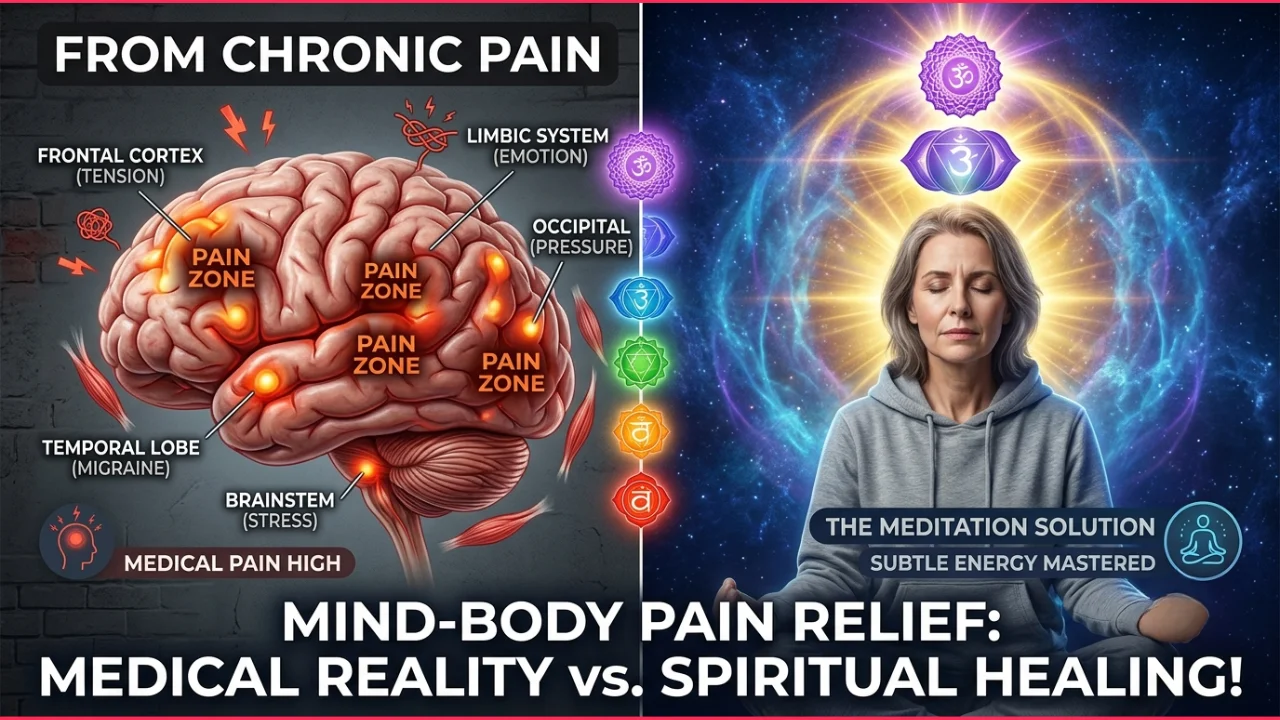
Which chakra is associated with headaches? In chakra philosophy, the Third Eye Chakra (Ajna), located between the eyebrows, and the Crown Chakra (Sahasrara), at the top of the head, are most often linked to headaches. An imbalanced Third Eye Chakra is associated with overthinking, confusion, and mental fog — while a blocked Crown Chakra is tied to feeling disconnected or overwhelmed. Practices like meditation, breathwork, and quiet reflection are commonly used to help restore balance to these energy centers.
Healing Secrets: Natural Ways to Relieve and Prevent Headaches
Real relief often comes from combining medical treatment with lifestyle and energy-based practices. Here’s what actually works.
Over-the-counter relief like ibuprofen, acetaminophen, and aspirin remains the first line of defense for occasional tension headaches, according to Cleveland Clinic. For migraine, doctors may prescribe triptans, which change blood flow patterns in the brain.
Hydration is one of the simplest fixes. Dehydration is a well-known trigger, so drinking water consistently through the day can prevent a surprising number of headaches before they start.
Stress management techniques — deep breathing, muscle relaxation, and mindfulness — are recommended by Cleveland Clinic as core tools for reducing headache frequency.
Biofeedback trains you to notice physical tension building in your body before it turns into pain, then teaches you to consciously release it.
On the energy-healing side, many people find relief through:
- Meditation focused on the Third Eye Chakra to quiet mental noise
- Breathwork to release stored tension and calm the nervous system
- Journaling to process emotions before they turn into physical symptoms
- Gentle neck and shoulder stretches to relieve cervicogenic tension
- Consistent sleep schedules, since irregular sleep is a major trigger across nearly every headache type
Keeping a headache journal — tracking triggers, duration, and intensity — is one of the most valuable habits you can build. It helps you and your doctor spot patterns that might otherwise stay invisible.
When to See a Doctor: Warning Signs You Shouldn’t Ignore
Most headaches are manageable at home. But some symptoms mean it’s time to seek immediate medical care. Contact a healthcare provider right away if your headache:
- Starts suddenly and reaches extreme pain within minutes
- Follows a blow to the head or injury
- Comes with a stiff neck, rash, or high fever
- Includes confusion, slurred speech, or vision loss
- Causes numbness, weakness, or paralysis
- Involves repeated vomiting or seizures
These are recognized red flags across Medical News Today, Healthline, and Cleveland Clinic. If you’re experiencing headaches more than 15 days a month, that’s also a signal to talk with a professional, since it may point toward a chronic headache disorder that needs a dedicated treatment plan.
FAQs About Headaches: Physical and Spiritual Meaning
What is the spiritual meaning of headaches? A headache is often seen as a signal of mental overload or a need to slow down and quiet the mind.
Can headaches have an emotional or spiritual cause? Yes. Suppressed emotions and unresolved stress are widely believed to contribute to physical tension and headache pain.
What do recurring headaches symbolize spiritually? Repeating headaches are often viewed as the body highlighting an ongoing issue or pattern that hasn’t been resolved.
Are headaches connected to stress and blocked energy? Many traditions believe unreleased stress creates blocked energy in the head and neck, contributing to tension and pain.
Which chakra is associated with headaches? The Third Eye Chakra and Crown Chakra are most commonly linked to headache symptoms in chakra philosophy.
Conclusion
Headaches speak two languages — one physical, one emotional. Understanding both gives you a real shot at lasting relief instead of just masking the pain. Whether you reach for medication, hydration, or a few quiet minutes of breathwork, the goal is the same: listen to what your body is telling you, and respond with care.

Malik Sohail is the admin and author of ParensMeaning.com. He researches and writes clear, engaging content about spiritual meanings, symbolism, signs, and interpretations, helping readers understand deeper insights behind everyday experiences.