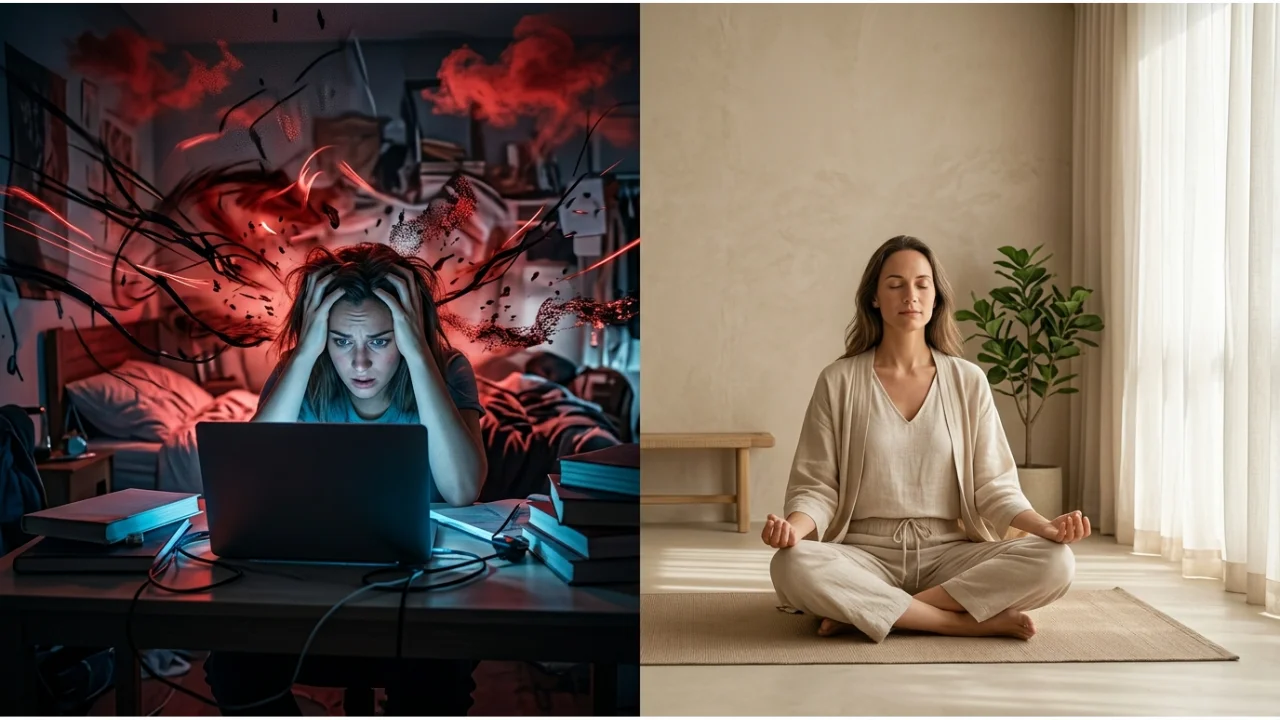
Beige looks ordinary. It’s easy to overlook it. But spiritually, this quiet color carries a message most people miss entirely.
From ancient sacred texts to modern color psychology, beige shows up in meditation spaces, dream symbolism, and spiritual meaning traditions worldwide. It’s not plain. It’s purposeful. Here’s what it’s really saying.
What Does the Color Beige Mean Spiritually?
The spiritual meaning of beige centers on one core idea: grounded calm. It is the color of the earth beneath your feet, the sand along a shoreline, the undyed linen of ancient sacred garments.
Spiritually, beige represents stability. When your inner world feels chaotic, beige offers a quiet anchor. It does not demand your attention. It simply holds the space.
Many spiritual teachers describe beige as a reset color. It signals a moment to pause, breathe, and return to what is essential. Think of it as the soul’s neutral gear.
Beige also functions as a spiritual container. Unlike bold colors that carry strong energy, beige holds other energies without competing. In energy work and healing spaces, neutral tones like beige are used deliberately to allow other forces to move freely.
Research published in Frontiers in Psychology confirms that neutral, earthy tones reduce cortisol levels and lower psychological stress. That is not accidental. It reflects what spiritual traditions have known for centuries: earthy hues restore balance.
What does beige color symbolize? At its core, beige symbolizes simplicity, humility, emotional balance, and spiritual neutrality. It is the color of things that last.
Must Visit:Upside Down Pyramid: Spiritual Growth Decoded
The Spiritual Symbolism of Beige Across Cultures and Religions
Every major spiritual tradition has a relationship with earthy, neutral tones. Beige sits at the center of this cross-cultural symbolism.
In the Bible, beige and linen tones carry deep meaning. Priests in ancient Israel wore undyed linen garments during sacred rituals. The color represented purity before God and freedom from worldly decoration. Genesis 3:19 reminds us: “for you are dust, and to dust you shall return.” That dust, that earth, is beige. It is the color of human humility and mortality.
In Buddhism, beige connects directly to the Middle Way — the path of balance that avoids extremes. The earth element, known as prithvi in Sanskrit, represents stability and form. A mind anchored in beige energy is a mind walking the Buddha’s path of moderation and mindfulness.
In Hinduism, ochre and saffron tones with beige undertones are worn by sadhus and sannyasins — those who have renounced worldly life in pursuit of moksha (spiritual liberation). The color communicates non-attachment, a life stripped of ego and excess.
In Native American traditions, sand and earth tones are treated as sacred grounding colors. They represent the physical world and the human connection to the land. The earth is not just beneath you — it is part of you.
In Ancient Egypt, beige linen was tied to purity and preparation for the afterlife. The wrapped linen of mummies carried this same earthy neutral tone, representing the transition between worlds.
In Islamic tradition, simplicity and humility before God are central values. Neutral earthy tones align with the call to dress and live without arrogance or extravagance.
A study on sacred spaces published in the Journal of Environmental Psychology found that earth-toned environments significantly reduce anxiety and increase feelings of spiritual connectedness.
What Does Beige Energy Mean? The Vibrational Frequency of This Color
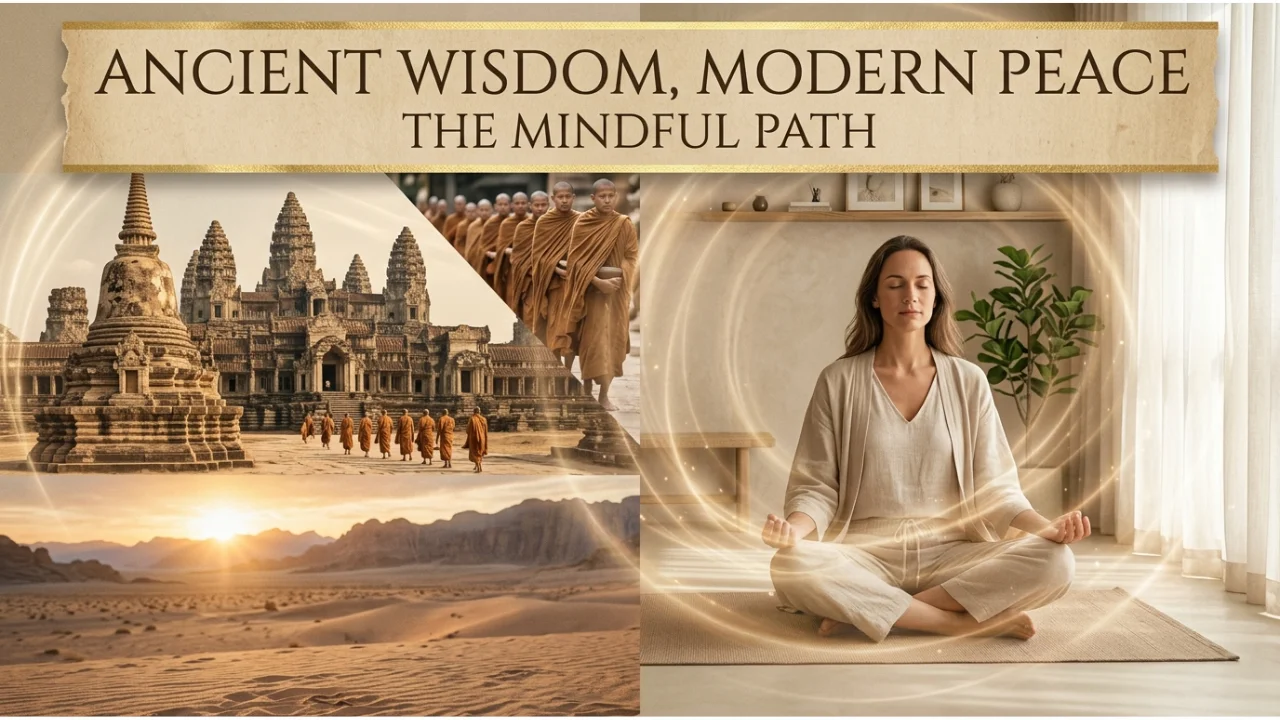
What does beige energy mean? In energy healing and color therapy, every color carries a specific vibration. Beige vibrates at a low, steady frequency. It is not high like red or electric like yellow. It hums quietly beneath everything.
Think of beige vibration as the spiritual equivalent of resting in still water. No waves. No disturbance. Just presence.
This makes beige uniquely powerful as a spiritual buffer zone. When emotions run high, beige energy absorbs the excess without amplifying it. It is why therapists, meditation rooms, and healing centers use neutral beige tones instinctively.
How does beige compare to white and gray? White vibrates at maximum clarity and purity. Gray carries ambiguity and uncertainty. Beige sits between both — it has the warmth of earth and the calm of neutrality. It is grounded where white floats and defined where gray blurs.
In chakra alignment, beige connects most directly to the root chakra (Muladhara). This chakra governs survival, safety, and groundedness. Beige energy feeds the root chakra with quiet stability, reinforcing your sense of belonging in the physical world.
There is also a secondary connection to the sacral chakra (Svadhisthana). Beige’s warm undertones carry a gentle creative energy — not the fire of orange, but the steady readiness of fertile soil.
According to the American Institute of Stress, environmental color plays a measurable role in emotional regulation. Neutral tones like beige are among the most effective for reducing baseline anxiety in both clinical and everyday settings.
What Is the Psychology Behind Beige? Color Psychology Explained
What is the psychology behind beige? This question runs deeper than most people expect. Beige is psychologically complex because it means very different things depending on who is experiencing it and why.
Carl Jung described a concept called the Persona — the social mask humans wear to fit into their environment. Beige is the color of that mask when it is designed to blend in. Choosing beige unconsciously can reflect a desire to be acceptable to the largest number of people by offending no one.
Jung’s theory of individuation — the process of becoming a fully integrated self — suggests that over-reliance on beige may indicate an undifferentiated part of the psyche. An area of potential not yet brought to full color.
From a Freudian perspective, beige can represent emotional suppression. Strong colors are linked to libidinal energy — passion, desire, aggression. Beige neutralizes them. It strips emotional intensity from a situation to make it feel manageable. That can be protective. Or it can be avoidance.
Adlerian psychology frames beige differently. Alfred Adler focused on the individual’s striving for significance within society. Beige dreaming or beige-choosing in this framework may reflect a fear of standing out — a strategy of safety through invisibility.
But there is also the healthy psychology of beige. Cognitive behavioral research identifies what psychologists call a cognitive schema — a mental filter through which you interpret the world. For some people, beige reflects a genuine preference for simplicity, calm, and low stimulation. That is not pathology. That is personality.
The most important psychological distinction is this: chosen beige versus forced beige. Choosing simplicity because you genuinely thrive in calm is healthy. Being faded into beige by circumstances, relationships, or systems that demand your invisibility is a warning sign worth examining.
The American Psychological Association has published research linking color psychology directly to personality behavior, confidence levels, and emotional expression patterns.
What Does Dreaming of Beige Mean Spiritually?

Dreaming of beige is more common than people realize. And it almost always carries a specific message your subconscious is trying to deliver.
The first key is how the beige felt in the dream. That emotional response is the actual message. The color is just the container.
A beige room in a dream can mean two opposing things. If it felt peaceful, it signals a desire for emotional stability and uncomplicated living. If it felt suffocating, it signals stagnation — a life drained of vitality and passion.
Dreaming of a beige desert landscape connects to one of the oldest spiritual symbols in human history. The desert appears in the journeys of Moses, Jesus, and Muhammad — all as sites of purification, testing, and revelation. A beige desert in your dream may signal a necessary period of emptiness before clarity arrives.
Wearing beige clothing in a dream often points to a feeling of blending in or choosing not to be seen. Ask yourself honestly: is that a relief or a loss?
Receiving a beige gift in a dream suggests accepting a more stable, conventional role in some area of your life. It may be an invitation to find peace in simplicity.
Painting beige walls a new color is one of the most direct dream symbols — it represents moving away from conformity and choosing self-expression over safety.
Beige can also appear as a transition color in dreams. You are between phases. The old identity has ended. The new one has not yet arrived. Beige is the spiritual waiting room — the neutral passage between one chapter and the next.
The Sleep Foundation notes that color in dreams is closely tied to emotional processing. Colors that appear repeatedly in dreams often represent patterns the brain is actively working through.
What is the spiritual dream meaning of beige? It is a call to examine your relationship with stillness, conformity, and untapped potential. The dream is not telling you to stay in beige. It is showing you where you currently are.
Why Is Beige the Color of the Rich? Spiritual and Cultural Perspective
Why is beige the color of the rich? This is a question almost no spiritual or color psychology site addresses directly. And yet it reveals something profound about how spiritual values and material culture intersect.
Walk into any ultra-wealthy home, high-end fashion boutique, or luxury hotel lobby. Beige dominates. This is not coincidence. It is a calculated spiritual and cultural statement.
The movement known as quiet luxury is built entirely on beige. Brands like Bottega Veneta, The Row, and Loro Piana reject loud logos and bold colors in favor of soft neutral palettes, impeccable materials, and understated design. The message: real wealth does not need to announce itself.
This maps directly onto a spiritual principle: non-attachment. The spiritually mature person — and ironically the genuinely wealthy person — does not need external validation through color. Beige communicates power by refusing to seek attention.
Historically, this is not new. In Ancient Rome, the ruling class wore undyed wool and natural linen — beige tones — as a mark of dignified restraint. Elaborate color required expensive dye. But the truly powerful could afford to simply not care.
In Ancient Egypt, fine linen (naturally beige-toned) was reserved for the priestly and noble classes. It signaled purity, refinement, and separation from the masses who wore rougher, darker fabrics.
The spiritual parallel is the concept of status through restraint. You do not need to perform wealth or holiness. You simply embody it. Beige is what that looks like in color.
Research from the Luxury Institute found that high-income consumers increasingly associate neutral palettes and understated design with authenticity, quality, and genuine status — while viewing loud branding as a signal of insecurity.
So beige is the color of the rich not because wealth buys beige. It is because genuine wealth — spiritual or material — no longer needs to shout.
Frequently Asked Questions
What does beige color symbolize?
Beige symbolizes stability, simplicity, emotional balance, and spiritual neutrality. It represents the earth, humility, and a grounded inner state. Spiritually, it is the color of things that endure quietly without demanding attention.
What does beige energy mean?
Beige energy vibrates at a low, steady frequency. It acts as a spiritual buffer zone, absorbing emotional excess without amplifying it. It connects to the root chakra, supporting feelings of safety, groundedness, and belonging. It is calm without emptiness.
What is the psychology behind beige?
Beige carries complex psychology. It can reflect a Jungian Persona (the social mask), Freudian emotional suppression, or a healthy preference for simplicity. The key distinction is chosen beige versus forced beige — peace through genuine preference versus invisibility through fear.
Why is beige the color of the rich?
Beige communicates power through restraint. The quiet luxury movement and historically elite classes have long used neutral, earthy tones to signal genuine status without performance. Spiritually, it reflects non-attachment — the ability to exist without needing to prove anything.
Final Thought
Beige is never just a background color. Every time it shows up — in your home, your dreams, your spiritual practice — it is carrying a specific message.
It is asking whether you are at peace or simply faded. Whether you chose stillness or had it chosen for you. The spiritual meaning of beige is not about being plain. It is about being rooted, patient, and quietly powerful.

Malik Sohail is the admin and author of ParensMeaning.com. He researches and writes clear, engaging content about spiritual meanings, symbolism, signs, and interpretations, helping readers understand deeper insights behind everyday experiences.