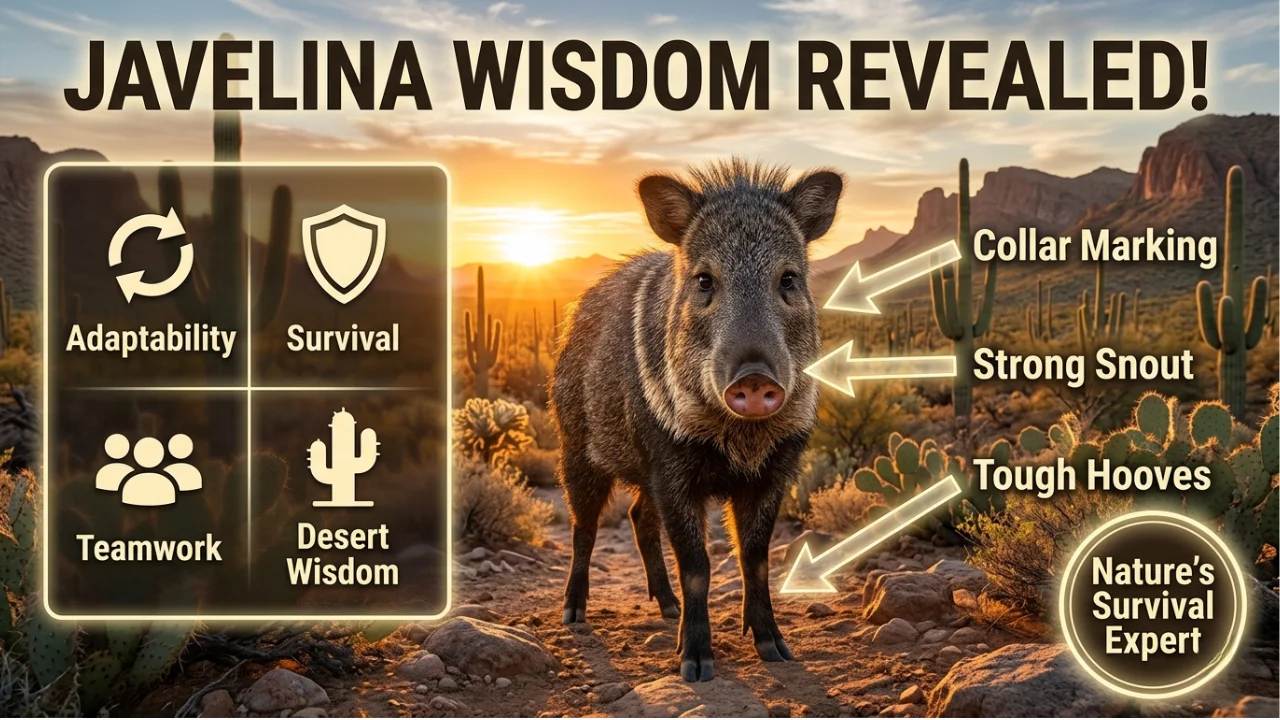
A javelina might dig up your garden, but it has spent millions of years mastering one of the harshest deserts in North America. Real javelina wisdom is not folklore. It is biology, behavior, and survival skill, proven again and again across the Sonoran Desert.
This guide breaks down how javelinas adapt, thrive, and even transform in Spiritual meaning across science, culture, and modern branding in 2026. Expect verified facts and the kind of detail most articles skip.
What Is a Javelina? Meet the Desert Icon Behind Javelina Wisdom
A javelina looks like a small wild pig, but it is not one. Its real name is the collared peccary, scientific name Tayassu tajacu. The name comes from the pale ring of fur circling its neck and shoulders, which is the easiest way to identify one at a glance.
Javelina vs. Wild Boar
Javelinas and pigs look related, but they split apart on the evolutionary tree almost 40 million years ago, according to the Arizona-Sonora Desert Museum. Pigs spread across the Eastern Hemisphere. Javelinas evolved only in the Americas, which explains why their teeth, stomachs, and feet are built so differently, even though the resemblance fools most people.
Where Javelinas Live
Javelinas range across Arizona, New Mexico, and Texas, then south through Mexico all the way down to Argentina, according to the Desert Museum. They favor desert washes, saguaro and palo verde forests, oak woodlands, and grasslands. Tucson, Arizona, is one of the most common places to spot one near a backyard wash.
Why Javelina Wisdom Resonates in 2026
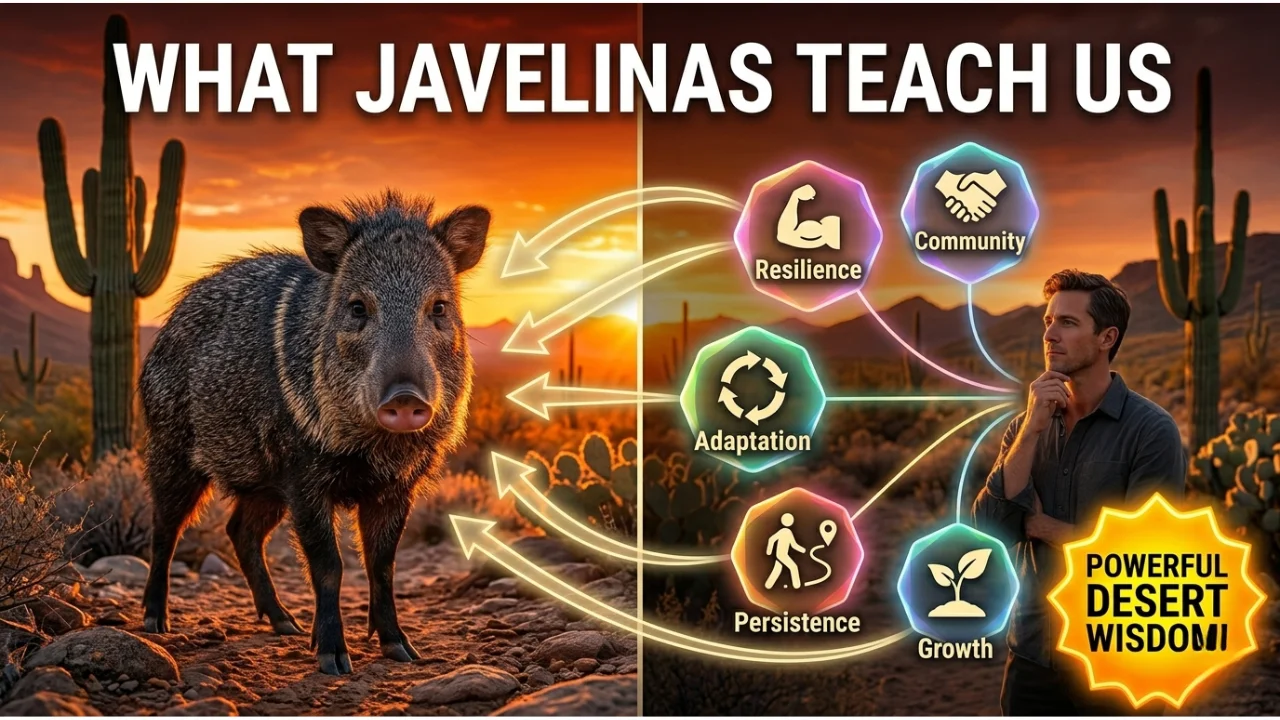
The phrase javelina wisdom has grown beyond biology. It now points to resilience: an animal that survives 100-degree heat, scarce water, and thorny food keeps finding a way forward. That same idea has shaped poetry, branding, and even community organizing materials, covered later in this guide.
Must Visit:Rat Path Crossing: 10+ Powerful Spiritual Signs Revealed
Adapt: Javelina Social Behavior and Squadron Survival Wisdom
Javelinas rarely go it alone. They live in tight family groups, and this social structure is the backbone of their survival strategy in a place with little cover and few easy meals.
Living in Squadrons
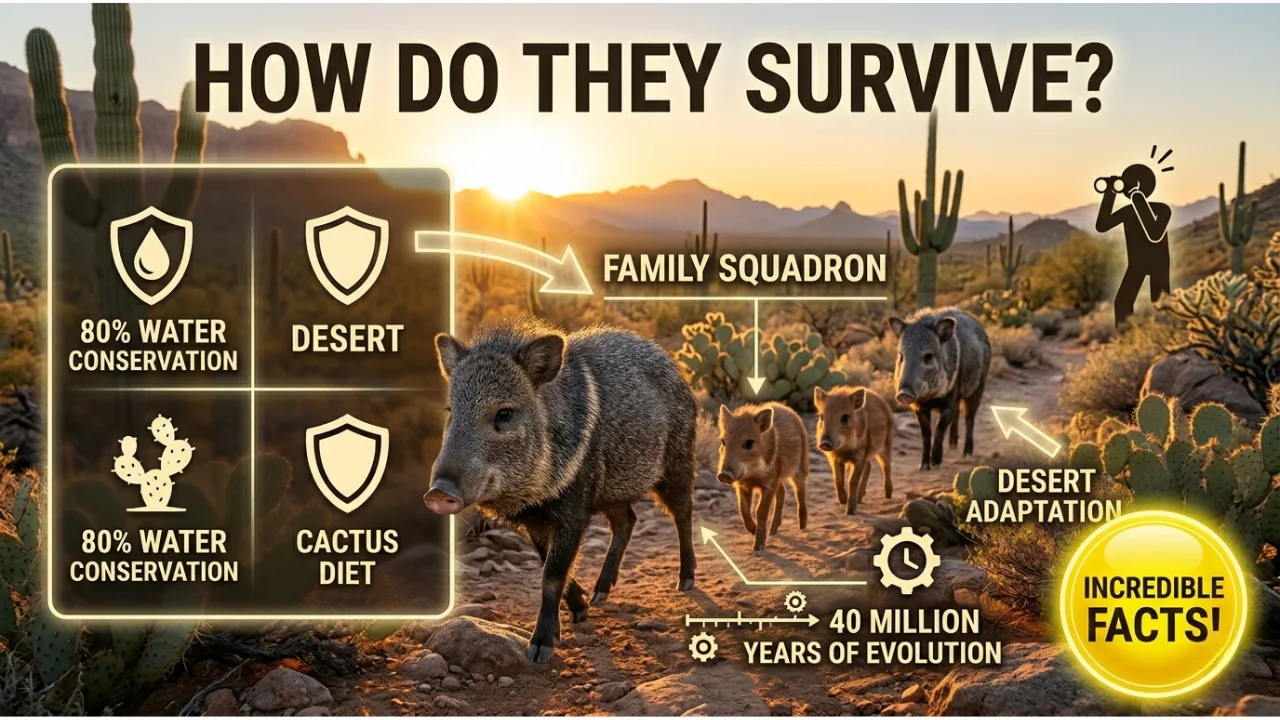
A javelina family group is called a squadron. Most squadrons hold around 10 members, though the Arizona-Sonora Desert Museum has documented one herd with 53 individuals. Each squadron defends a shared territory that includes sleeping areas and feeding grounds.
The Javelina Handshake
Javelinas have poor eyesight, so smell carries the conversation. A musk gland near the rump releases a strong scent, and squadron members rub against each other’s glands to blend their individual smells into one shared family perfume, a behavior the Desert Museum calls the javelina handshake.
Mothers and Reds
Baby javelinas are called reds, named for their rust-colored coat. A mother usually has one or two young at a time, and field observers note that the babies stay in near-constant physical contact with her, rarely breaking away even while the squadron is on the move.
Thrive: Desert Adaptations That Help Javelinas Survive Extreme Conditions
Surviving the desert takes more than thick skin. Javelinas carry physical and behavioral adaptations that let them outlast heat, drought, and a diet most animals couldn’t stomach.
Walking, Not Trotting
Field trackers have observed that javelinas walk almost everywhere instead of trotting, even while foraging across open ground. In extreme desert heat, walking generates far less internal heat than a trot, which helps the animal avoid overheating during the hottest hours of the day.
A Pseudo-Ruminant Stomach
Javelinas digest tough desert plants using a four-chambered stomach, but they are not true ruminants. Biologists call them pseudo-ruminants because they ferment fiber in a forestomach chamber without chewing cud the way a cow or deer does. They also carry an appendix, a feature shared with very few mammals outside of primates.
Beating Dehydration in the Desert
Water is scarce in javelina country, so their bodies compensate. Field research notes that javelinas can cut evaporative and urinary water loss by Water is scarce in javelina country, so their bodies compensate. Field research notes that javelinas can cut evaporative and urinary water loss by as much as 80 percent during dry stretches, and some have reportedly gone six days without drinking water, relying instead on moisture from prickly pear cactus pads.
during dry stretches, and some have reportedly gone six days without drinking water, relying instead on moisture from prickly pear cactus pads.
Javelina Intelligence and Personality: The Wisdom Behind the Wild
People often assume javelinas are simply aggressive pests. Spend time watching them, and a more layered animal shows up.
How Intelligent Are Javelinas?
How intelligent are javelinas? They rely heavily on smell and sound rather than sight, since their eyesight is weak, according to the Desert Museum. This sensory trade-off lets javelinas learn their small home range quickly, often under a mile and a half across, and pass spatial knowledge through scent-marked trails and shared territory.
What Is the Personality of a Javelina?
What is the personality of a javelina? Despite their tough look, javelinas are deeply social and affectionate within their squadron. They groom each other, stay in close physical contact, and depend on group bonds enough that isolated javelinas in research pens have struggled both physically and behaviorally without companions.
Aggression or Just Posturing?
A javelina’s sharp canine teeth, sometimes over an inch long, look dangerous, and they can defend themselves fiercely when cornered. Most of the time, though, they rely on low-energy posturing instead of real fights: gaping their mouths wide to flash their teeth, raising the hair along their neck and rump gland, then slowly backing away rather than charging.
Transform: Javelina Symbolism in Native Poetry, Culture, and Modern Branding
The javelina’s story doesn’t end in the desert. It has shaped literature, identity, and even commercial branding, often in ways most wildlife articles never mention.
Joy Harjo’s “Javelina” and the Power of Desert Metaphor
Poet Joy Harjo published “Javelina” in her 1990 collection In Mad Love and War, as documented by EBSCO Research Starters. The prose poem sets a young Native American woman against the backdrop of South Tucson and draws a parallel between her and the javelina: both scavenge and adapt inside a landscape reshaped by development and displacement.
The Elder Javelina’s Wisdom
Harjo’s poem closes with an elder javelina offering a closing voice of wisdom about the desert and its losses. Literary scholars at EBSCO Research Starters point to this final image as the heart of the poem’s message: even in a damaged landscape, resilience and cultural memory survive, much like the javelina itself keeps adapting long after its habitat changes.
From Poem to Brand: The Javelina Wisdom Trademark
The phrase Javelina Wisdom also exists as a registered U.S. trademark, filed in 2008 by James A. Massengill and officially registered in 2011 under serial number 76688926. The mark covered books, newsletters, and workbooks focused on personal and community motivation, plus related apparel and educational seminars, before its registration was cancelled in 2021 for failing to file a required renewal.
FAQS;
How intelligent are javelinas?
Javelinas are not problem-solvers in the way raccoons are, but they are highly attuned to their environment. Weak eyesight pushes them to rely on smell and sound, and they learn their home range well enough to find food, water, and shelter efficiently within it.
What is the personality of a javelina?
Javelinas are social, affectionate, and protective of their squadron. They are not naturally aggressive toward humans, but they will defend themselves and their young if they feel cornered or threatened.
What is a javelina also known as?
A javelina is also called a collared peccary, and in some regions it goes by jabalí, cochi javalín, or skunk pig, a nickname earned from its strong musk scent.
What are some fun facts about javelinas?
Javelinas walk instead of trot to manage desert heat. Their babies are called reds. One documented squadron held 53 animals. And despite the resemblance, a javelina is not closely related to any pig species alive today, since pigs and peccaries split apart nearly 40 million years ago.
Final Thoughts on Javelina Wisdom
Javelina wisdom comes down to one idea: adapt to what the land gives you, and keep moving forward. From squadron loyalty to a pseudo-ruminant stomach to a place in Native American poetry, the collared peccary has earned its reputation as one of the desert’s toughest and most misunderstood survivors.

Malik Sohail is the admin and author of ParensMeaning.com. He researches and writes clear, engaging content about spiritual meanings, symbolism, signs, and interpretations, helping readers understand deeper insights behind everyday experiences.