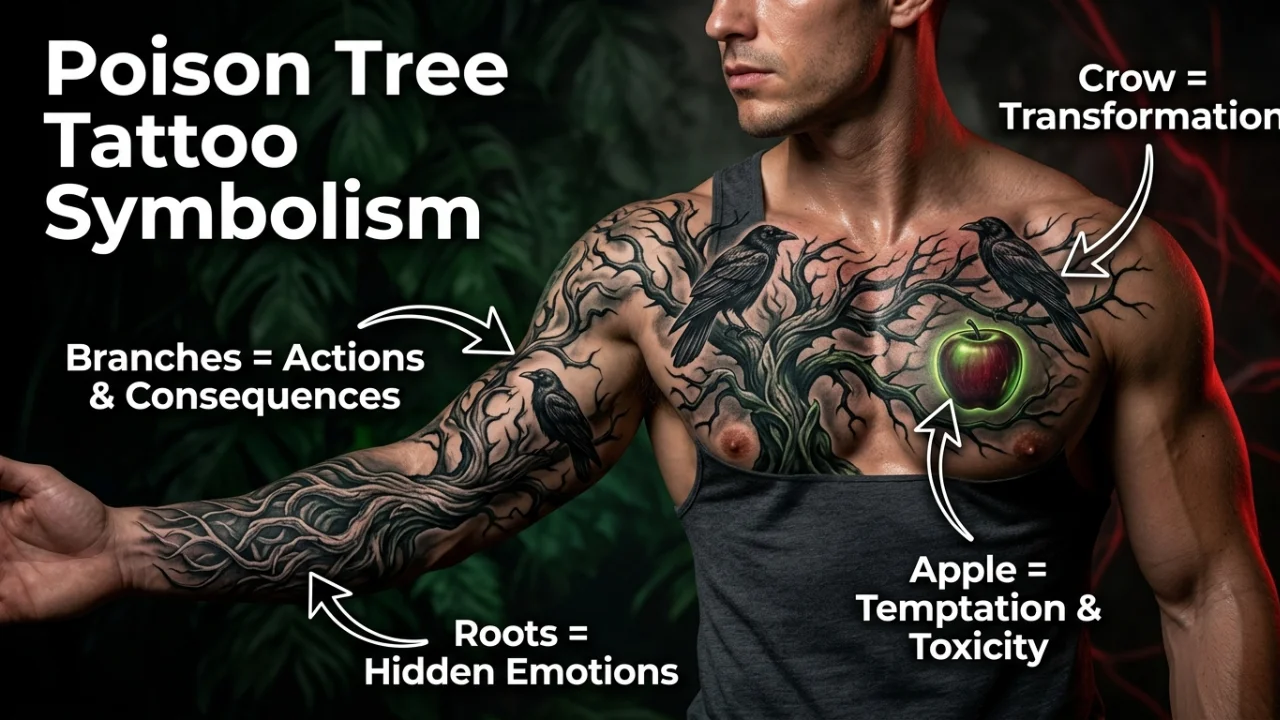
A tree usually stands for life. A poison tree flips that idea on its head. It shows something natural turning dark, twisted, and dangerous.
That contrast is the whole point. The poison tree tattoo meaning speaks to hidden anger, silent pain, and the quiet cost of holding feelings in. Yet it also points to growth and healing.
Quick answer: A poison tree tattoo usually means suppressed anger or buried emotion that grows harmful when left unspoken. For many Americans, it also marks self-awareness, accountability, and personal growth.
Tattoos like this are more common than ever. Pew Research Center found that 32% of U.S. adults now have a tattoo, and 69% got one to honor or remember something. The poison tree fits that storytelling trend perfectly.
What Does a Poison Tree Tattoo Mean?
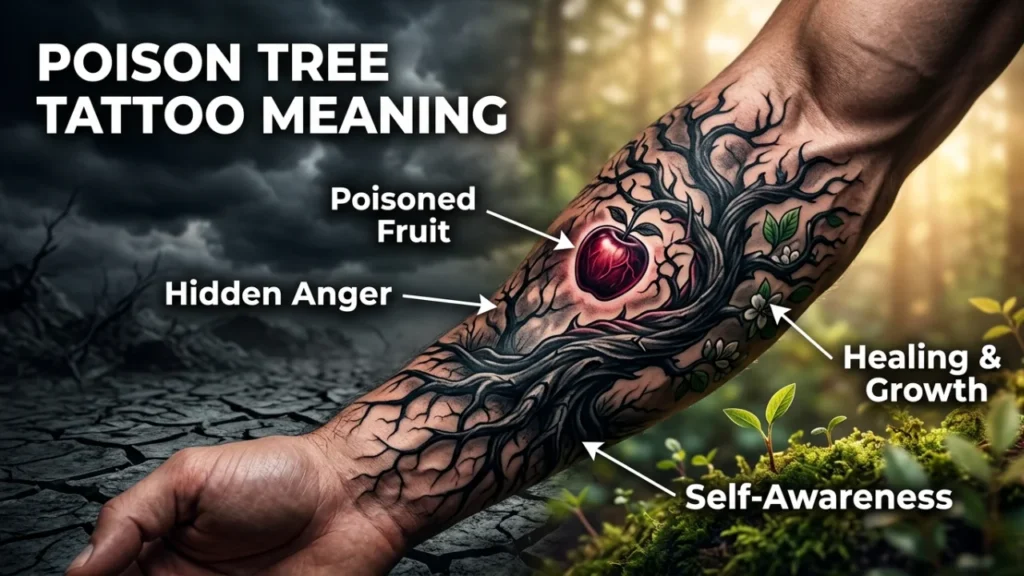
At its core, the poison tree symbol is about emotion that grows in the dark. Like a tree, feelings spread and deepen over time. When those feelings are anger or hurt, the result can turn toxic.
What does a poison tree tattoo represent? Most often, four things:
- Hidden anger and suppressed emotions. Wrath kept inside doesn’t fade. It festers and grows.
- Betrayal, revenge, and emotional damage. Broken trust leaves scars that shape how people think and act.
- Transformation and healing. Facing that pain can lead to growth, peace, and emotional honesty.
- A warning. It reminds the wearer to speak up before resentment takes root.
This is why the poison tree tattoo meaning is so layered. It holds both darkness and light at once. Here is the split at a glance:
| Positive Meanings | Negative Meanings |
|---|---|
| Growth after pain | Buried rage |
| Self-awareness | Revenge and betrayal |
| Healing and release | Toxic relationships |
| Resilience | Emotional self-harm |
The Story Behind It: William Blake’s “A Poison Tree” Poem
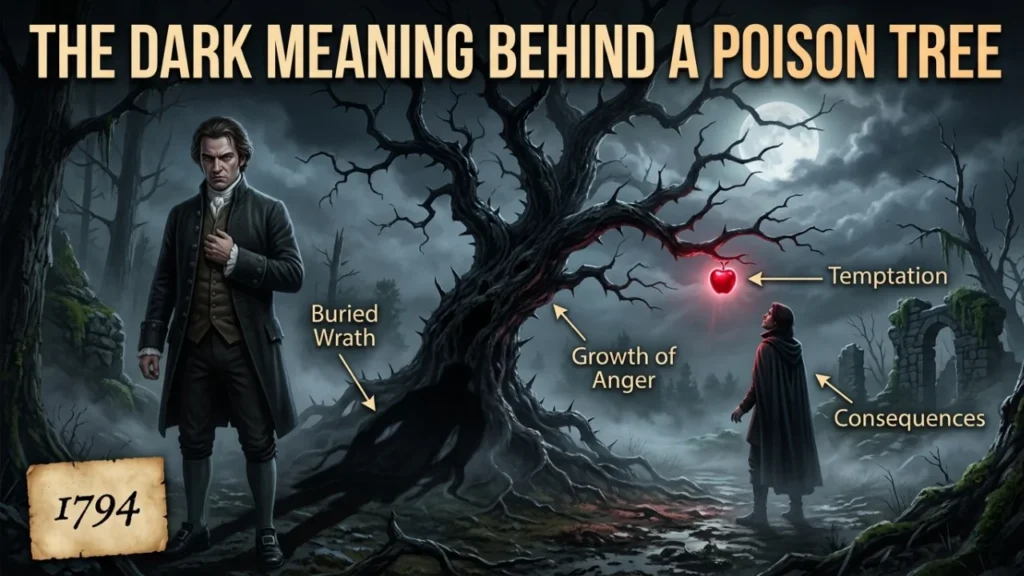
The idea traces back to one short, sharp poem. English poet William Blake wrote “A Poison Tree” and published it in 1794 in his collection Songs of Experience.
The poem tells a simple story. The speaker is angry with a friend, says so, and the anger fades. Then he is angry with a foe, stays silent, and the buried wrath grows like a plant.
That hidden anger swells until it bears a bright, tempting apple. The foe sneaks in, eats it, and dies. Blake’s message is direct: silence feeds resentment, and unspoken anger turns deadly.
Why does this poem still matter today? It is widely taught in American schools, so the imagery feels familiar. The apple also echoes the forbidden fruit of Eden, adding a moral weight people instantly recognize.
Modern readers split into camps. Goth and dark-art circles love its eerie, destructive edge. Therapy-minded readers see a hopeful nudge to release buried pain. Both readings live inside the same tattoo.
Poison Tree Tattoo Symbolism: Roots, Branches, and Poisoned Fruit
The poison tree symbolism gets its power from its parts. Each piece tells a slice of the story.
What do the parts of a poison tree tattoo mean?
- The roots stand for hidden feelings. They are the unseen causes buried under the surface.
- The branches show actions and consequences. They are how inner emotion spreads into real life.
- The fruit and apple mark the poisoned outcome. They are temptation, deceit, and the final result of bottled-up rage.
Beyond the poem, the symbol carries deeper layers. In Christian terms, it nods to sin and moral choice. In Eastern thought, it mirrors karma, where every action sows a result. And in psychology, it lines up with Carl Jung’s idea of the shadow self — the dark side we all carry but rarely face.
Owning a poison tree, then, can mean owning that shadow. It is a quiet act of honesty about the parts of ourselves we keep hidden.
Popular Designs, Placements, and Color Symbolism
The poison tree tattoo bends to many styles. Your choices shape the message as much as the symbol itself.
Popular styles include bold blackwork, clean fine-line, dramatic neo-traditional, eerie gothic, and subtle minimalist designs. Common add-ons are skulls, crows, a full moon, a split apple, or roots that stretch onto the hand.
Placement sends its own signal:
- Forearm or hand: visible, confident, open about your story.
- Chest: private and close to the heart.
- Back or ribs: strength carried quietly, often for yourself alone.
- Neck: bold and fearless.
Color adds another layer of meaning. Black means mystery and depth. Red signals anger, danger, or passion. Green blends life with toxicity. Purple hints at spiritual conflict, while grey suggests calm and balance.
One expert tip: understand the design before you commit. Pew also found that about a quarter of tattooed adults regret at least one tattoo, so a custom piece with real meaning is the safer choice. Pick a skilled artist, talk through the concept, and follow proper aftercare.
What Your Poison Tree Tattoo Says About You
This poison tree symbol often reflects a thoughtful, deep personality. It suggests someone comfortable sitting with hard feelings instead of hiding from them.
Does the meaning differ for men and women? Slightly. For men, it often points to strength, control, and survival. For women, it leans toward healing, growth, and emotional power. At its heart, though, the meaning is gender-neutral — it speaks to shared human experience.
Is a poison tree tattoo a sign of anger? Not really. That is the biggest myth. It is not “pro-anger,” occult, or violent. Most wearers mean the opposite: restraint, awareness, and the choice to grow past old wounds.
Think of it as a marker. It often lands on people during a turning point — after loss, betrayal, or a season of real change.
FAQs
Is a poison tree tattoo bad?
No. A poison tree tattoo is not bad or unlucky. It carries dark themes like anger and pain, but most people choose it to show healing, honesty, and personal growth. The meaning depends entirely on the wearer’s story.
What is the meaning of poison tree?
A poison tree means anger or emotion that grows harmful when kept hidden. The idea comes from William Blake’s 1794 poem “A Poison Tree,” where buried wrath grows into a deadly fruit. It stands for the consequences of silence and unspoken feelings.
What does a line down your chin mean?
A vertical line tattooed down the chin is a traditional marking found in some Indigenous cultures, such as the moko kauae among the Māori and chin tattoos among certain Native and Arctic peoples. It can signal identity, status, lineage, and a rite of passage. Outside those cultures, a chin line is usually a personal or stylistic choice.
Why does Beyoncé have three dots on her finger?
Beyoncé has three small dots tattooed on her left ring finger. They are widely reported to represent her three children — Blue Ivy, Rumi, and Sir Carter. She has not publicly explained them, but fans and outlets agree the dots are a tribute to her kids.
Conclusion
The poison tree tattoo meaning lives in its dark beauty. It blends literature, psychology, and raw human emotion into one striking image.
It warns against buried anger. It also celebrates the courage to heal. Whatever your reason, this poison tree symbol turns a hard truth into lasting art — and reminds us that ignored feelings never simply disappear. They grow.

Malik Sohail is the admin and author of ParensMeaning.com. He researches and writes clear, engaging content about spiritual meanings, symbolism, signs, and interpretations, helping readers understand deeper insights behind everyday experiences.