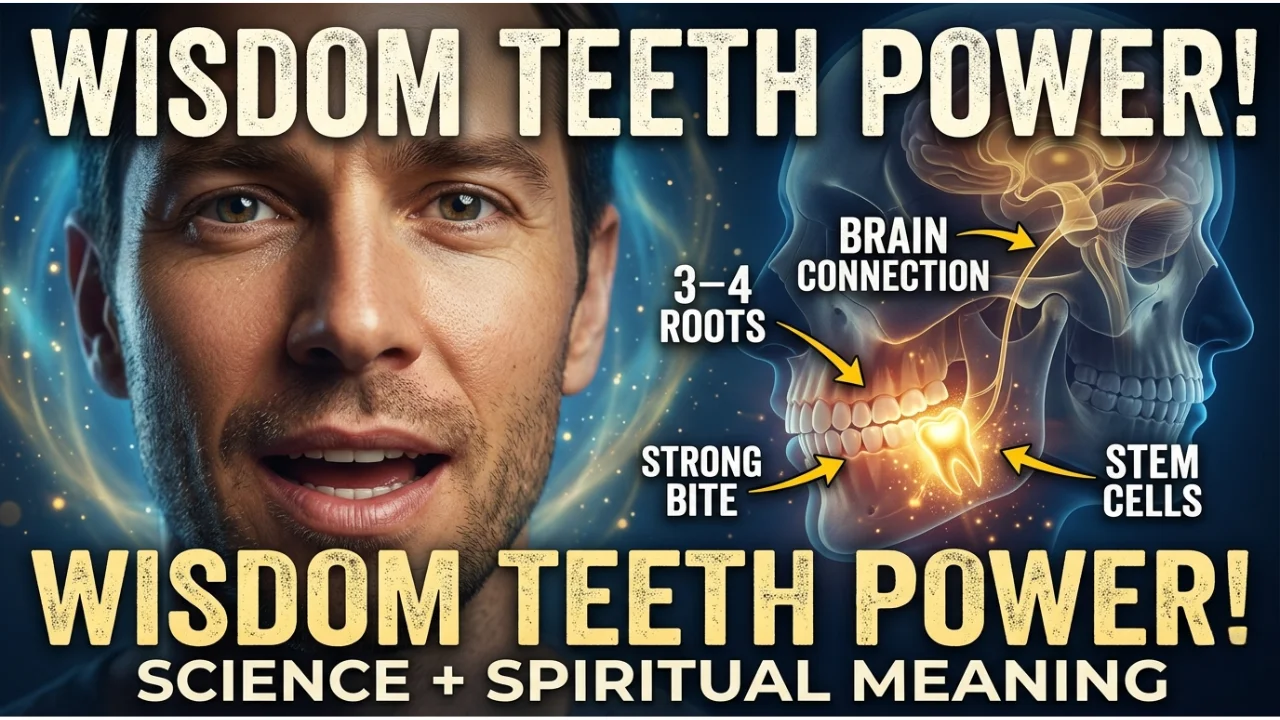
Most people think wisdom teeth are just a dental problem waiting to happen. That is not the full picture.
These third molars carry real biological strength, a surprising link to the brain, and deep spiritual meaning that most dental blogs never mention. This article covers all of it — the science, the symbolism, and what it means for your oral health in 2026.
What Is the Real Power Behind Your Wisdom Teeth?
Why Wisdom Teeth Erupt at Life’s Most Critical Stage (Ages 17–25)
Wisdom teeth typically erupt between the ages of 17 and 25. This is not random timing.
That window is when the human jaw reaches full skeletal maturity. The body waits until the jaw is ready before pushing the final set of molars through. That is why they are called wisdom teeth — they arrive at a more mature stage of life.
According to Cleveland Clinic, in about 8 out of 10 people, at least one wisdom tooth does not erupt fully. This is directly tied to how much smaller modern human jaws have become compared to our ancestors.
Must Visit:Breast Itching Spiritual Meaning: Everything You Need to Know
The Biological Strength of Third Molars — Built Differently Than Other Teeth
Third molars have a unique anatomical build. Most have two to three roots, and some have four. The roots can fuse into one large cone shape or splay outward, giving these teeth an exceptionally strong grip in the jawbone.
Because of their deep anchorage and position at the back of the mouth, wisdom teeth generate significant occlusal force — the pressure produced when upper and lower teeth meet. When healthy and properly aligned, they contribute to the overall chewing load alongside your second molars.
Their position also helps preserve posterior bone density. When a tooth is removed, the jawbone in that area gradually loses density due to a lack of chewing stimulus. Keeping a healthy wisdom tooth helps prevent that bone loss.
| Key Fact: Wisdom teeth with 3–4 roots have more surface contact with the jawbone than almost any other tooth — making their structural role significant when properly positioned. |
What Wisdom Teeth Power Means for Your Overall Oral Health in 2026
In 2026, the conversation around wisdom teeth and oral health is shifting. Dentists and board-certified oral surgeons are now leaning toward a more individualized approach — evaluating each tooth rather than recommending blanket removal.
Tools like Cone Beam CT imaging and intraoral cameras allow oral surgeons to see root depth, nerve proximity, and bone levels with high precision. This technology means the keep-or-remove decision is now more accurate than ever before.
If your wisdom tooth is fully erupted, fits your bite, and is easy to clean — it has real value. It supports jaw structure, adds chewing surface, and can even serve as a backup if a second molar is ever lost.
Wisdom Teeth and the Brain — The Surprising Neurological Connection
What Do Wisdom Teeth Do for Your Brain?
This is the question almost no dental blog answers. And the answer is genuinely fascinating.
Wisdom teeth sit directly near the trigeminal nerve — the largest and most complex cranial nerve in the human head. This nerve controls sensation across the entire face and jaw, and plays a key role in how the brain processes pain, pressure, and oral stimulation.
During eruption, wisdom teeth exert pressure that directly stimulates this nerve pathway. Some researchers suggest this pressure is part of a broader neurological development process that coincides with late adolescent brain maturation.
Trigeminal Nerve, Jaw Pressure and Cognitive Development
The trigeminal nerve has three main branches — ophthalmic, maxillary, and mandibular. The mandibular branch runs directly through the lower jaw, in close proximity to the roots of lower wisdom teeth.
When impacted wisdom teeth press against this nerve, it can cause facial pain, jaw tenderness, and even headaches. But when wisdom teeth erupt without compression, the nerve interaction is natural — part of how the jaw signals its final stage of growth to the central nervous system.
This is also why untreated wisdom tooth pain can feel so intense. The trigeminal nerve is the primary pain pathway for the entire face. Pressure or infection near wisdom teeth activates this network quickly and strongly.
Stem Cell Research — The Future Power of Wisdom Teeth in 2026
Here is the part most competitors completely miss.
Dental pulp stem cells (DPSCs) found inside wisdom teeth are one of the most accessible and promising sources of adult stem cells in the human body. Research published in peer-reviewed journals has shown these cells can differentiate into neurons, bone cells, and cardiac tissue.
A 2021 study in Oral Surgery, Oral Medicine, Oral Pathology and Oral Radiology noted that third molar tissue is now being explored for regenerative medicine applications. Banking wisdom teeth — similar to cord blood banking — is an emerging option some families in the USA are beginning to consider.
In 2026, stem cell banking from wisdom teeth is a real and growing conversation in regenerative dentistry. Before agreeing to extraction, it may be worth asking your oral surgeon about pulp preservation options.
Wisdom Teeth Spiritual Meaning — Ancient Wisdom for Modern Life
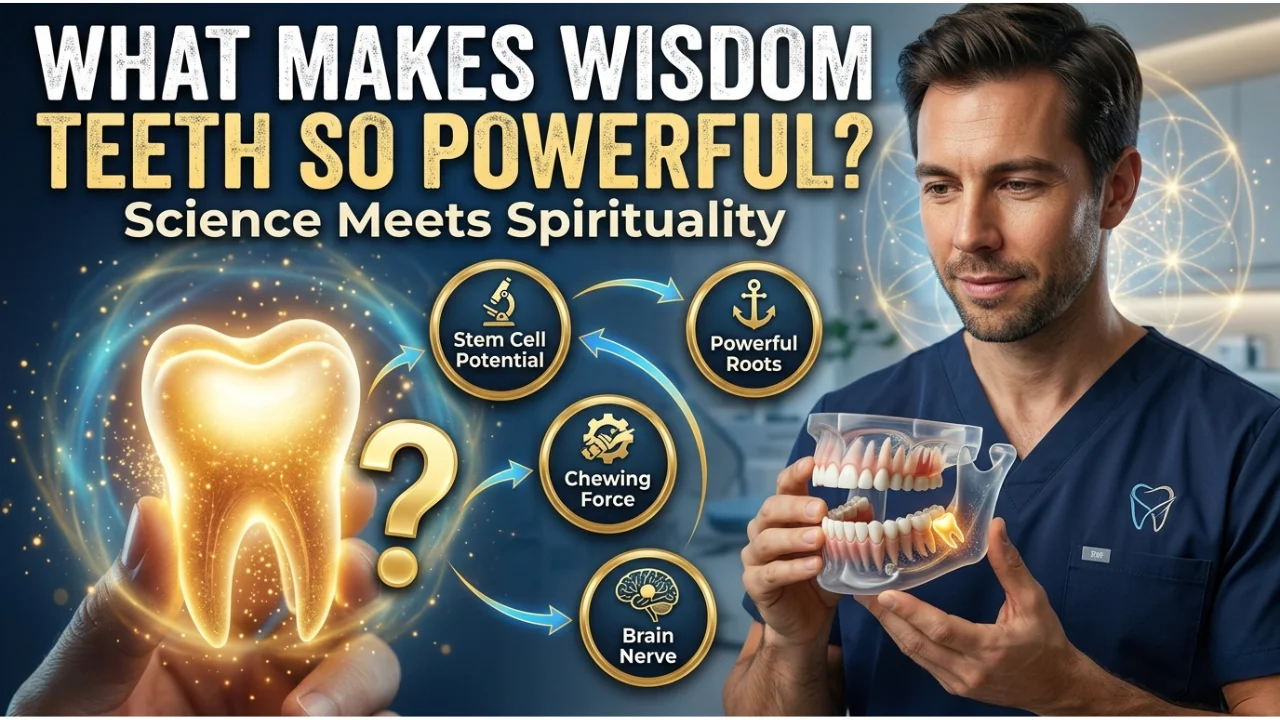
Why Are Wisdom Teeth Important Spiritually?
Across cultures and across centuries, the arrival of wisdom teeth has been seen as more than a dental event. It has been treated as a rite of passage — a marker that a young person is crossing into adulthood.
The name itself carries weight. These are not called third molars in everyday language. They are called wisdom teeth — because they arrive when life experience and personal maturity are meant to deepen.
In many spiritual traditions, physical transitions in the body are seen as mirrors of inner growth. The emergence of wisdom teeth at ages 17 to 25 — a time of major identity formation and life decisions — makes this symbolism particularly resonant.
What Different Cultures and Traditions Believe About Third Molars
In Traditional Chinese Medicine (TCM), the teeth are connected to energy meridians that run through the body. The third molars specifically are linked to the heart and small intestine meridians. Pain or eruption complications in this area are sometimes read as signals of emotional or energetic imbalance.
In various indigenous healing traditions, tooth pain — especially in the back molars — is associated with suppressed anger, difficulty making decisions, or resistance to change. These belief systems see the body as a map of inner life.
In modern spiritual wellness communities across the USA, wisdom teeth eruption is increasingly framed as a call to alignment — physically, emotionally, and energetically. The pain of eruption is reframed as the discomfort of growth.
The Symbolism of Wisdom Teeth Erupting at a Turning Point in Life
Think about when wisdom teeth arrive. You are finishing high school. Starting college. Entering the workforce. Navigating your first real independence. The body is literally pushing new strength through at the exact moment life demands more from you.
That is not a coincidence many spiritual traditions are willing to ignore. The message is consistent: new challenges require new power. And the body provides it — in the form of stronger, deeper-rooted teeth built for grinding through whatever comes next.
Whether you view this through a biological or spiritual lens, the timing of wisdom teeth eruption aligns with one of the most transformative chapters of human life. That alone makes them worth understanding more deeply.
Keep or Remove? Making the Smart Wisdom Teeth Decision in 2026
When Wisdom Teeth Are Worth Keeping — Signs You Have Healthy Third Molars
Not every wisdom tooth needs to come out. According to Cleveland Clinic, you do not need wisdom teeth removed unless they cause problems. The key signs a wisdom tooth is worth keeping include:
• Fully erupted — the tooth has broken through the gum completely.
• Properly aligned — it fits the bite without pushing against adjacent teeth.
• Easy to clean — you can reach it with a toothbrush and floss.
• No pain, no infection, no decay — confirmed by clinical exam and imaging.
When all four conditions are met, a wisdom tooth can remain functional for decades. Regular dental checkups with your dentist or oral surgeon are essential to monitor it over time.
When Removal Is the Smarter Power Move — Impaction, Infection and Crowding
Impacted wisdom teeth are the primary reason for removal. Impaction means the tooth is trapped beneath the gum or jawbone — fully or partially — and cannot erupt into a clean position.
Impacted teeth create deep pockets where food and bacteria collect. This leads to pericoronitis (a painful gum infection around the wisdom tooth), tooth decay in the wisdom tooth or neighboring second molar, and in some cases, jaw cysts that damage the surrounding bone.
According to WebMD, cysts from impacted wisdom teeth can damage the jawbone and nerves if left untreated. The NCBI also notes that untreated impacted teeth can result in cavities, gum disease, and serious oral health complications.
Removal is also recommended when wisdom teeth cause overcrowding that shifts other teeth, interferes with orthodontic treatment, or threatens the roots of adjacent second molars.
What Board-Certified Oral Surgeons Evaluate Before Making the Call
A qualified oral and maxillofacial surgeon does not make this decision based on symptoms alone. They use a full clinical picture:
• Cone Beam CT (CBCT) imaging — 3D view of root depth, bone levels, and nerve proximity.
• Intraoral camera — real-time visual of gum tissue and eruption status.
• Periodontal pocket depth measurements — checks for early gum disease.
• Bite analysis — evaluates whether the wisdom tooth is affecting occlusion.
Anesthesia options — including local anesthesia, IV sedation, and general anesthesia — are chosen based on the complexity of the case. Recovery typically takes a few days to one week for most patients.
Mastering Wisdom Teeth Care — What Most People Get Wrong in 2026
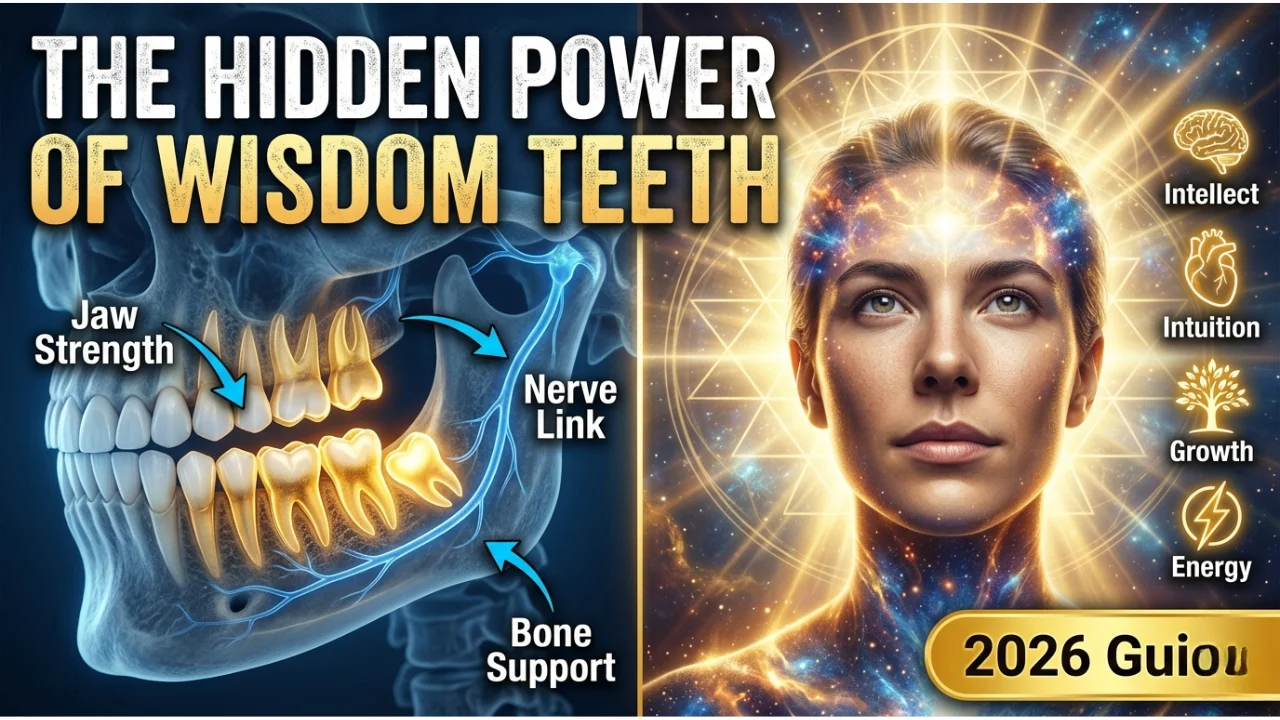
Daily Oral Hygiene Habits That Protect Your Third Molars
Wisdom teeth are notoriously difficult to clean because of their position at the very back of the mouth. Most people brush the front and middle teeth well but barely reach the third molars.
Cleveland Clinic recommends brushing two to three times per day and flossing daily. For wisdom teeth specifically, angling your toothbrush at 45 degrees toward the back gum line is essential. A water flosser can also be effective at clearing bacteria from the hard-to-reach pockets around third molars.
Routine dental exams every six months allow your dentist to catch early decay or gum inflammation around wisdom teeth before it becomes a serious problem. Early intervention is always cheaper and less painful than emergency treatment.
Foods, Habits and Lifestyle Choices That Strengthen or Destroy Wisdom Teeth Power
What you eat directly impacts the health of your third molars. Sugary and highly processed foods accelerate bacterial buildup in the pockets around wisdom teeth, increasing the risk of pericoronitis and decay.
On the other hand, foods rich in calcium, vitamin D, and phosphorus — dairy products, leafy greens, fatty fish — support bone density and help keep the jaw strong around all molars, including wisdom teeth.
Smoking and tobacco use dramatically increase the risk of dry socket after extraction and slow gum healing around erupting wisdom teeth. If you smoke and are experiencing wisdom tooth issues, this is another reason to address both habits together.
How to Work With Your Dentist or Oral Surgeon to Make the Right Call
The best outcomes happen when patients ask the right questions. Before any decision is made about your wisdom teeth, ask your provider:
• Is there imaging showing the full root position and nerve proximity?
• Are there signs of active infection, decay, or bone loss right now?
• What is the realistic risk if I monitor this tooth rather than remove it?
• Is stem cell banking from the dental pulp an option before extraction?
A board-certified oral surgeon will always prefer a data-driven decision over a routine one. Your job is to be an informed patient — not a passive one.
FAQ — Wisdom Teeth Power Questions Answered
Is the wisdom tooth the strongest?
Wisdom teeth are among the most structurally anchored teeth in the mouth. With 2 to 4 roots and deep bone integration, they generate significant chewing force. However, “strongest” depends on position and alignment. A healthy, fully erupted wisdom tooth with multiple roots is structurally powerful — but an impacted one is a liability, not an asset.
Why are wisdom teeth important spiritually?
Wisdom teeth arrive during one of the most formative periods of human life — ages 17 to 25. Across cultures, this timing is seen as symbolic: the body pushing new strength through at the exact moment life demands growth and decision-making. In Traditional Chinese Medicine, third molars are connected to specific energy meridians. In many spiritual traditions, they represent a passage into maturity and personal power.
What’s special about wisdom teeth?
Several things make wisdom teeth unique. They are the last permanent teeth to erupt, arriving well after all other adult teeth are established. They contain dental pulp rich in stem cells that researchers are now studying for regenerative medicine. They sit near the trigeminal nerve — the most complex cranial nerve in the head. And they have the deepest, most variable root systems of any tooth in the mouth.
What do wisdom teeth do for your brain?
Wisdom teeth sit in close proximity to the trigeminal nerve, which controls facial sensation and pain signaling across the entire face and jaw. During eruption, they exert pressure that directly interacts with this nerve pathway. Additionally, dental pulp stem cells found inside wisdom teeth are being studied for potential use in neurological repair and brain tissue research — making these teeth more neurologically relevant than most people realize.
Final Thoughts
Wisdom teeth power is real — biologically, neurologically, and spiritually. These are not just problem teeth. They are structurally strong, stem cell-rich, nerve-adjacent, and symbolically significant.
The smartest move in 2026 is not automatic removal. It is an informed decision — backed by proper imaging, expert evaluation, and a full understanding of what these third molars actually carry. Talk to a board-certified oral surgeon, ask the right questions, and treat this decision with the seriousness it deserves.

Malik Sohail is the admin and author of ParensMeaning.com. He researches and writes clear, engaging content about spiritual meanings, symbolism, signs, and interpretations, helping readers understand deeper insights behind everyday experiences.